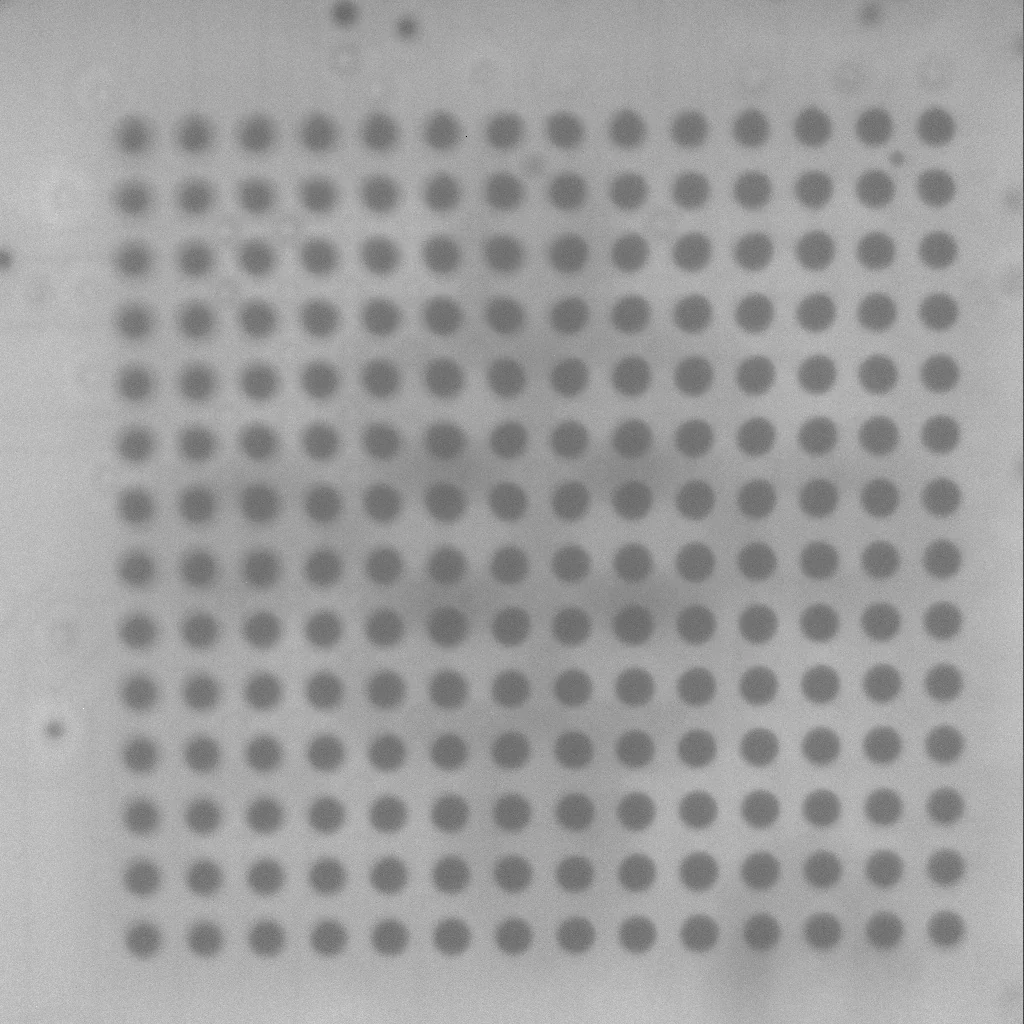
BGA joints sit beneath the package; visual inspection alone cannot show their condition. Use the RFQ to define inspection coverage, acceptance criteria, records and disposition for this board. Ask the supplier to confirm which processes and evidence are available for the order.
BGA/QFN/LGA scope to confirmStencil and reflow questionsX-ray scope to confirmRework authority and records
Service visualIllustrative inspection visual
Illustrative image for inspection planning, not a customer production record. Ask which project-specific X-ray images or records can be supplied with the build.
Hidden-joint riskSpecify X-ray coverage, acceptance criteria, rework authority, and evidence in the RFQ.
Package reviewList footprint, pitch, stencil, MSL, and thermal details for supplier review.
Inspection evidenceAsk which SPI, AOI, or X-ray checks and records can be included in the quote.
Next decisionIdentify critical packages and state the acceptance requirements.
Process before placement
List package, footprint, solder-volume, thermal-mass, and board constraints for the RFQ.
X-ray criteria defined early
Set coverage, sampling, acceptance criteria, and disposition with the customer and supplier before release.
Controlled rework decisions
Specify permitted rework methods, approval owners, and required inspection and test evidence.
BGA projects that need extra control
This path is for buyers whose boards include hidden-joint, thermal, or dense-package risks where normal visual inspection is not enough.
Fine-pitch processor boards
MCU, CPU, FPGA, wireless, and memory boards with dense layouts.
Industrial and vehicle electronics
Products with customer-specific inspection, test, or traceability records to agree.
Prototype BGA validation
Prototype builds where the team needs to agree the process evidence and revision handoff.
Mixed package assemblies
Boards combining BGA, QFN, connectors, passives, and THT operations.
BGA assembly scope for hidden-joint quality control
Use this list to define requirements; the supplier confirms methods and evidence available for the order.
Package and program details to confirm
List package families such as BGA, QFN, LGA, MCU, FPGA, wireless, and memory for supplier review.
Identify dense placement and mixed-package risks in the RFQ.
State prototype, pilot, or repeat build quantity and stage.
Ask whether SMT, THT, programming, or test scope can be included in the quotation.
Process questions for the RFQ
Agree whether stencil, paste-volume, and reflow-profile review is needed.
Specify MSL handling and package-sensitivity requirements.
Ask which SPI, AOI, X-ray checks and records are available for this build.
Set rework permission, approval triggers, acceptance rules and retest needs.
Buyer deliverables
Package risk comments
Inspection and x-ray scope notes
Issue and rework records
Release evidence tied to lot and revision
Illustrative hidden-joint inspectionX-ray images can support review of hidden-joint indications after reflow. Confirm the project-specific images, method, and reporting scope for the order.Visible workmanship reviewIf these checks matter to the product, define how surrounding placement, polarity, soldering, and first-article evidence will be assessed.
What to share for an accurate RFQ
For a project-specific quote, share package datasheets, board files, placement data, and inspection requirements. Flag any handling, reflow, or rework constraints; the supplier can then confirm what is feasible.
Files and project details
Gerber or ODB++ files with paste layer
BOM with package type, BGA pitch, and MSL information when available
Centroid and assembly drawing with package orientation
X-ray, void, or customer inspection criteria
Reflow or special handling requirements if known
Target quantity and whether the build is prototype, pilot, or production
Decisions to confirm early
Confirm which hidden-joint parts require x-ray review
Define void criteria with a measurement method and applicable customer requirement.
Agree rework limits and customer approval triggers
Confirm MSL handling, bake, and dry-pack expectations
Decide whether first-article evidence is required before full release
How the manufacturing workflow runs
Use a gated RFQ process: share package and board data, define inspection requirements, and agree required evidence and disposition before release.
1
Package risk review
List BGA pitch, footprint, stencil openings, thermal mass, and placement density for supplier review.
2
Profile and inspection plan
Agree reflow assumptions, X-ray coverage, measurement method, and acceptance criteria with the customer and supplier.
3
Assembly execution
Confirm which placement, reflow, AOI/SPI, X-ray, or rework steps are offered and record them in the approved order plan.
4
Evidence handoff
If records are required, specify how inspection results, issues, and release status identify the lot and revision.
BGA quality controls buyers should require
Visual checks do not show joints beneath a BGA. Specify whether X-ray and electrical testing are needed, what each must cover, and how acceptance is decided for the product.
Stencil and paste governance
Ask for design-specific review of aperture, paste volume, and board finish; include assumptions and change approvals.
Thermal profile control
Specify profile targets from package mix, board thickness, paste specification, and component sensitivity; agree how the profile is measured.
X-ray evidence
Define X-ray coverage, views, record format, and who dispositions findings; confirm sample or full-population inspection.
Rework discipline
Agree rework attempt limits, approvals, and post-rework acceptance evidence before build.
BGA inspection and release records to define
Appearance alone cannot show BGA joints beneath the package. Use the RFQ to define inspection scope, acceptance criteria, and rework authority before production.
Evidence to specify or request
Ask whether package-risk review for BGA/QFN/LGA is in the quoted scope.
Specify whether stencil, paste, and reflow planning comments are needed.
Define X-ray coverage and void criteria if the customer requires them.
State MSL, bake, and storage handling expectations.
Agree rework disposition and inspection evidence to retain.
Decision evidence
Package risk reviewReflow planX-ray criteriaRework record
Buyer question
How this service answers it
When it matters most
Inspection scope
Set sample rate or full coverage from product and customer requirements.
Use when product requirements call for documented hidden-joint inspection.
Acceptance criteria
Specify project criteria for voids, bridges, opens, and rework before build.
Use when the quality plan requires objective inspection evidence.
Thermal profile
Board thickness, package mix, and thermal mass inform the profile review.
Use when BGA yield is sensitive to heat behavior.
Prototype learning
Use when prototype findings or approved changes must carry into the next revision.
Use when first samples will become pilot builds.
BGA assembly risks to address during RFQ
Flag these questions before accepting the quote so responsibilities and disposition are clear.
Risks to clarify
No defined x-ray or void acceptance criteria
Incorrect footprint or paste design for package type
MSL-sensitive parts without bake or storage plan
Heavy board thermal mass not considered in reflow profile
Rework limits not agreed with buyer before defects appear
Prototype BGA changes not recorded for the next revision
For BGA-heavy boards, identify critical packages in the BOM and RFQ. The supplier can then review the request and confirm quoted inspection and process scope.
FAQ
Do all BGA boards need x-ray inspection? Decide X-ray coverage from package, board, product use, customer requirements, and the agreed measurement method. Confirm the scope before release.
How do you confirm whether BGA assembly fits a prototype build? Send the design files, package details, quantity, and product requirements; ask the supplier to confirm feasibility, scope, and quote terms for this build.
Can BGA be reworked? Rework may be possible for some package and board combinations. Agree permission, attempt limits, approvals, and post-rework tests in the RFQ; confirm feasibility for the specific build.
What information helps quote BGA assembly accurately? For an early quote discussion, share Gerber or ODB++, BOM, centroid, package and MSL details, X-ray criteria, quantity, and test or rework requirements. Files can follow later if needed.
How can I confirm which services are included in a turnkey BGA quote? Request a supplier review of the available files, package list, and requirements to identify open scope questions for the quotation.
Send your BGA package list
Send the design files, package details, quantity, and product requirements; ask the supplier to confirm feasibility, scope, and quote terms for this build.
PCBA PARTNER is operated by Dongguan Hepin Electronic Technology Co., Ltd.
BGA assembly quote
Prepare your BGA assembly quote
Share available board files, package details, quantity, and inspection requirements. Use the RFQ to confirm which processes are feasible and what the quotation includes for this build.