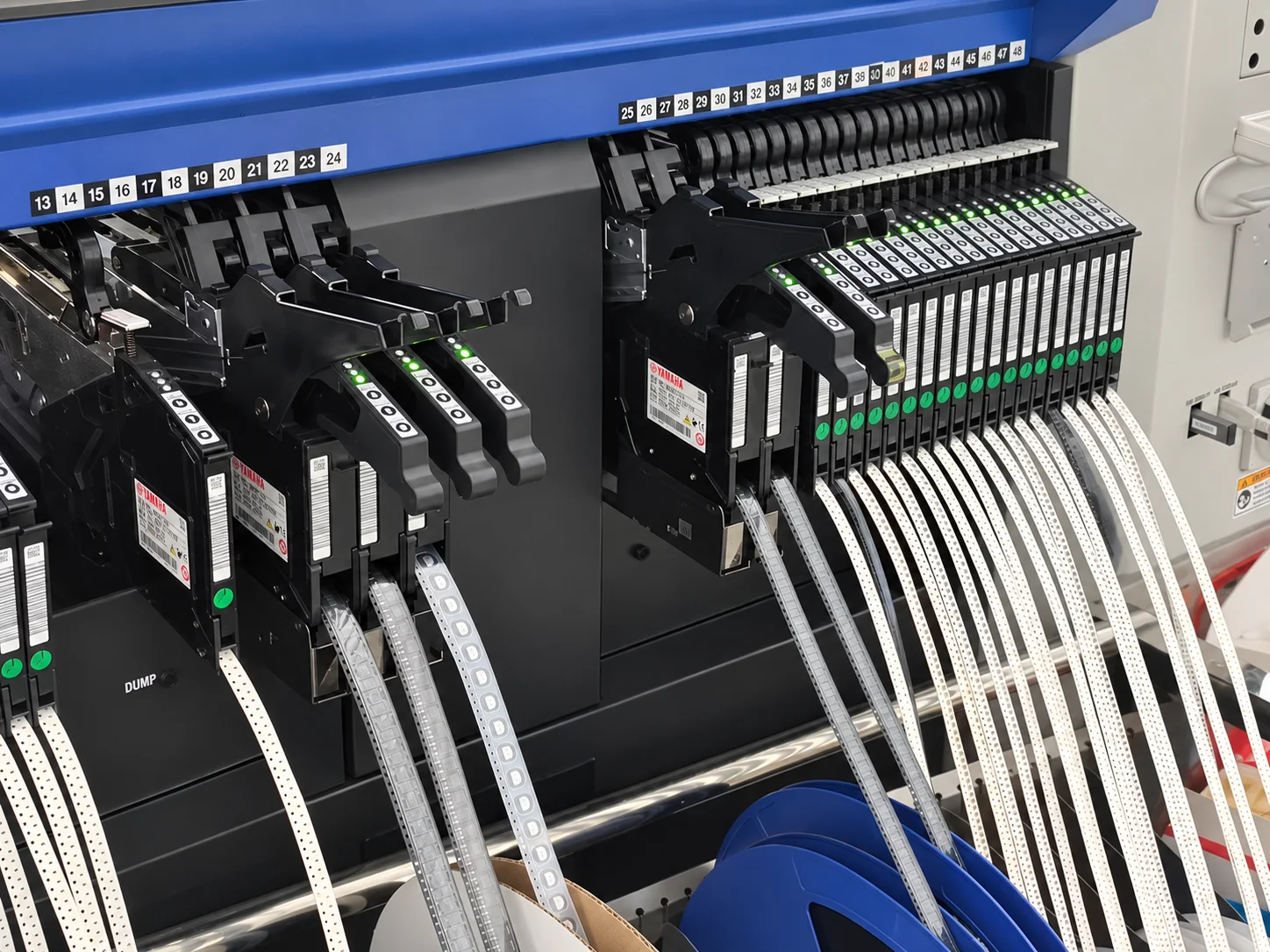
Representative SMT line context for placement setup, feeder control, SPI/AOI workflow, and production readiness.
Line-fit riskConfirm placement, stencil, reflow, and package risk before SMT release.
Dense boardsFine-pitch ICs, BGA/QFN/LGA, 0402/0603-class passives, and mixed SMT/THT.
Inspection evidenceSPI/AOI, polarity checks, and x-ray path for hidden-joint parts.
Next decisionMark BGA parts, test needs, and target dates in the RFQ.
Fine-pitch process planning
Stencil, solder volume, thermal mass, and package density are reviewed before launch.
High-mix scheduling
Prototype, pilot, and repeat orders can be managed with stable setup records and change notes.
Inspection visibility
SPI, AOI, visual review, and test checkpoints are aligned to product risk and release expectations.
When SMT assembly needs a stronger supplier review
This page is for buyers comparing PCBA factories for placement quality, process control, and reliable communication during NPI.
Dense control boards
Fine-pitch ICs, dense passive arrays, and compact layouts need early DFM and stencil review.
Mixed SMT/THT products
Connectors, terminals, relays, or power parts can be sequenced after SMT without losing traceability.
Frequent revision programs
Engineering changes are easier to control when placement, BOM, and test records are versioned.
Short lead-time RFQs
Urgent builds still need clear polarity, package, and sourcing checks before the line is released.
SMT scope to confirm before the line is scheduled
A useful SMT quote should explain package risk, inspection depth, and downstream steps, not only placement price.
Capability range
0402/0603-class passives and fine-pitch ICs
BGA, QFN, LGA, connectors, and mixed technology
Prototype, pilot, and repeat SMT lots
SMT output linked to THT, test, and box build
Testing and controls
Stencil and solder volume review
SPI, AOI, polarity, and visual checkpoints
X-ray planning for selected hidden-joint parts
Reflow and first-article release records
Buyer deliverables
SMT setup assumptions
Package and DFM risk comments
Inspection and issue notes
Revision-linked production records
Placement line controlPrograms, feeders, stencil setup, and first-article release establish the repeatable SMT process.Post-reflow inspectionAutomated checks are supported by focused visual review for workmanship and product-specific risks.
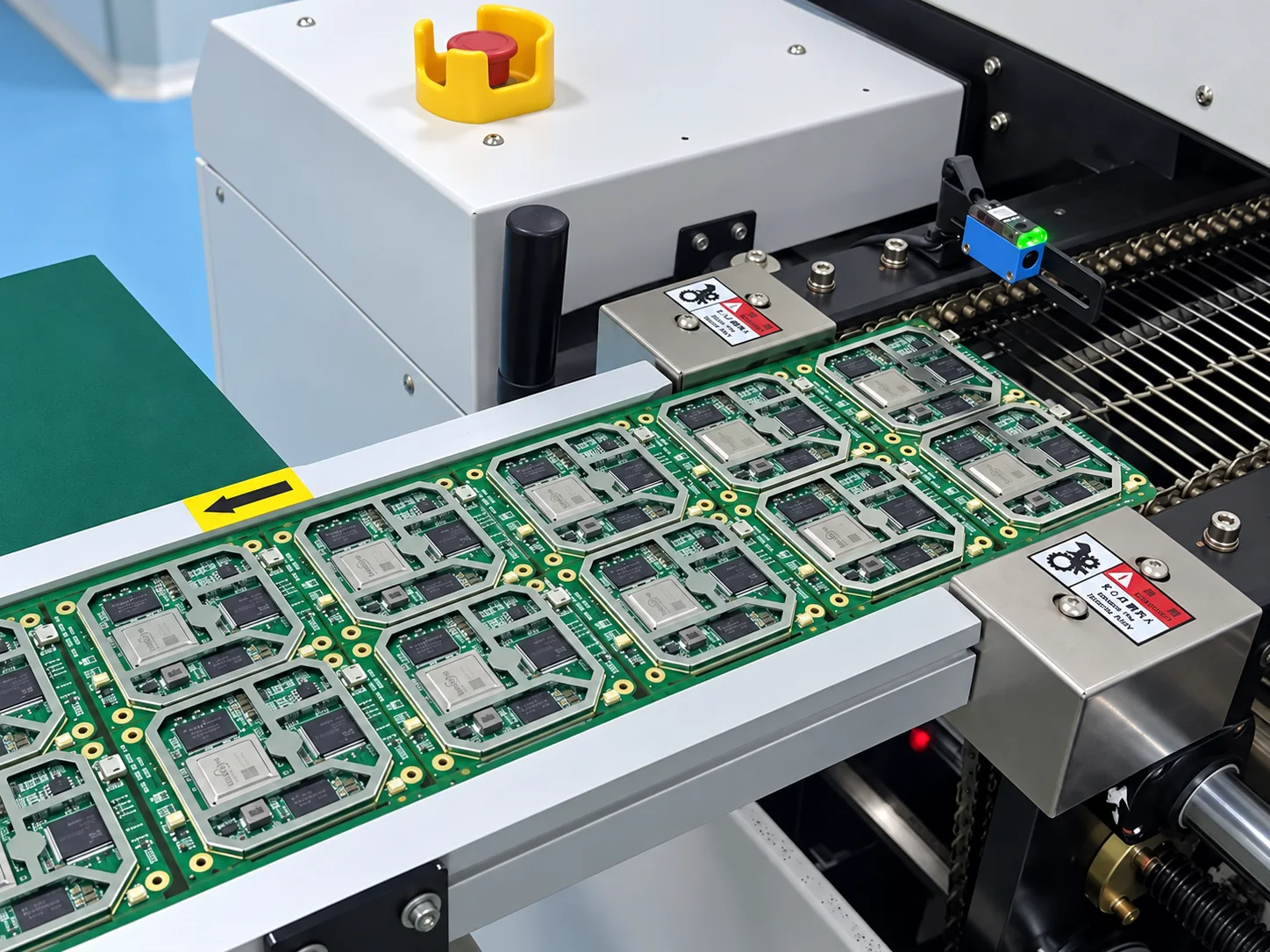
Panel assembly in production
Populated PCB panel on the conveyor.
What to share for an accurate RFQ
Complete files help us return a cleaner quotation with fewer assumptions and fewer hidden changes later.
Files and project details
Gerber or ODB++ data with solder mask and paste layers
BOM with manufacturer part numbers, package, and approved alternates
Centroid file with rotation and side information
Assembly drawing with polarity and do-not-place notes
Panelization preference or board outline constraints
Inspection, x-ray, programming, ICT, or functional test requirements
Decisions to confirm early
Confirm component packaging format: reel, cut tape, tray, or tube
Flag MSL-sensitive parts and bake requirements
Confirm BGA/QFN x-ray scope when hidden joints are present
Agree first-article approval method before full release
Define rework limits for critical packages
How the manufacturing workflow runs
The workflow is built to reduce uncertainty before production release and keep useful records for repeat orders.
1
File and package review
We check footprint, polarity, package density, and BOM availability before locking the SMT plan.
2
Stencil and line setup
Stencil thickness, paste strategy, feeder setup, and process parameters are prepared for the package mix.
3
Placement and reflow
Placement, reflow, SPI/AOI, and operator checks are executed with records tied to the build.
4
Post-SMT release
THT, cleaning, programming, test, or box build steps continue from the approved SMT output.
SMT controls buyers should ask for
A good SMT supplier should make process risks visible before they become yield problems.
Polarity and orientation checks
LEDs, diodes, IC pin one, connectors, and special marks are checked against the drawing.
Paste and reflow governance
Thermal profile and solder volume are reviewed for dense, heavy, or heat-sensitive boards.
Hidden-joint inspection
BGA, QFN, LGA, and other hidden-joint parts are flagged for suitable inspection depth.
Lot and revision records
Placement file, BOM, and production notes stay connected for repeat orders.
SMT deliverables buyers can compare
Good SMT quotations should expose package risk, inspection scope, and reflow assumptions instead of only quoting placement cost.
Practical deliverables
Package and footprint risk review for dense boards
Stencil, feeder, placement, and reflow planning notes
SPI/AOI and hidden-joint inspection scope if applicable
MSL, bake, and customer-supplied part handling notes
For urgent SMT orders, include photos or notes for any unusual package, connector, polarity mark, or customer-supplied material condition.
FAQ
Can SMT and through-hole assembly be combined? Yes. SMT, selective THT, manual soldering, and connector assembly can be planned in one controlled process.
Do you support BGA and fine-pitch parts? Yes. We review package type, board design, reflow assumptions, and inspection needs before production.
What files are required for SMT assembly? Gerber or ODB++, BOM, centroid data, assembly drawing, quantity, and any inspection or test requirements are the core files.
Can I supply some SMT components myself? Yes. Customer-supplied parts can be handled through a consigned or mixed-supply workflow.
How do you reduce SMT defects? We focus on DFM review, paste control, reflow planning, first-article checks, AOI/SPI, and clear rework rules.
Send your SMT assembly files
Share Gerber, BOM, centroid, target quantity, and any BGA or inspection notes. We will review line fit, component risks, and quotation assumptions.