PCB fabrication
Review fabrication data, stack-up, material, finish, controlled impedance where required, and panelization before the board is ordered.
From your BOM to a finished build
PCB fabrication, component sourcing, assembly, and agreed testing. One coordinated quotation, with material decisions and acceptance requirements defined before the build.
Files optional to start · No account required
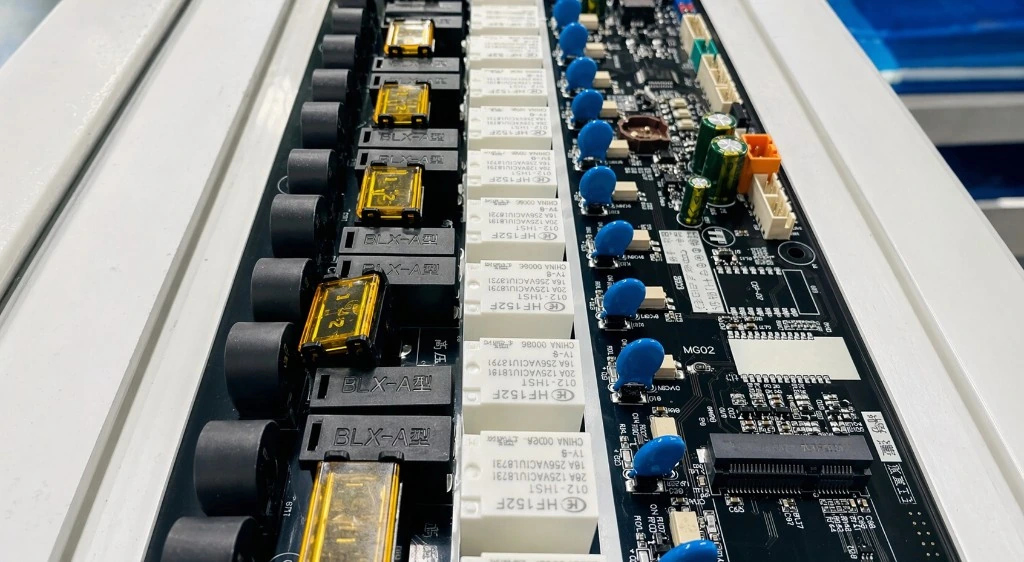
01 / Agree the work
Turnkey PCB assembly combines board fabrication, component purchasing, and assembly in one coordinated order. Inspection, testing, programming, and shipment requirements belong in the agreed quotation.
Review fabrication data, stack-up, material, finish, controlled impedance where required, and panelization before the board is ordered.
Review exact manufacturer part numbers, availability, approved alternates, and customer-supplied parts before purchasing.
Define SMT and through-hole operations, inspection coverage, programming, and functional test requirements for the build.
Need enclosure assembly, cable connections, or final packaging? Include them in the RFQ and review the box build assembly scope.
02 / Choose material ownership
Choose according to which materials you want to purchase and which you want to supply.
03 / Compare the quotation
Compare quotes against the same revision, quantities, and test scope. A low assembly price alone does not describe the cost of a complete build.
| Cost item | What changes it | What to confirm |
|---|---|---|
| PCB & components | Board specification, exact MPNs, quantity, and availability | Approved parts, order multiples, excess material, and quote validity |
| Assembly | Placement count, package mix, through-hole work, and process needs | Unit price at each requested quantity break |
| Setup & tooling | Stencils, programming setup, fixtures, and test development | One-time charges and reuse assumptions for repeat orders |
| Test & shipment | Test coverage, test time, packing, destination, and delivery terms | Included records, freight, duties, taxes, and exclusions |
Approved build files, available components, PCB fabrication, and test readiness all affect the schedule. Ask for the limiting item, open approvals, and dispatch assumptions. Quotation timing and production lead time are separate.
04 / Prepare the RFQ
Start with the available files and quantities. Identify anything missing so the review can distinguish confirmed requirements from assumptions.
Optional file checks: Use the BOM checker and pick-and-place checker to review file fields and reference consistency before sending the package. Review the findings, then attach the files you choose to share to your RFQ; nothing is transferred automatically. These checks do not verify polarity, electrical function, component availability, or manufacturing readiness.
If an NDA is required, arrange it before sharing confidential design files.
05 / From review to shipment
Check file revisions, quantities, BOM availability, and test requirements. Identify missing inputs and quotation assumptions.
Resolve DFM questions, component choices, cost items, and schedule conditions before purchasing and production release.
Follow the approved build plan. Agree first-article checkpoints, inspection coverage, and any programming or functional testing.
Review the requested inspection and test records, open issues, packing, labels, and shipping instructions.
06 / Define acceptance
Inspection and functional testing answer different questions. Select the coverage, acceptance criteria, and report format for your product before the build begins.
Agree sourcing channels, traceability fields, alternate approvals, and who authorizes changes. Keep fabrication, BOM, placement, and firmware revisions aligned.
Review quality controls →Confirm the need for SPI, AOI, X-ray, ICT, or FCT against the board and product risks. Test access, fixtures, firmware, and pass/fail limits affect feasibility and cost.
Review capabilities and evidence →DFM and BOM review notes, approved substitutions, first-article results, agreed inspection/test records, and packing information.
These are planning templates, not completed customer inspection reports. Actual records depend on the agreed scope and any disclosure restrictions.
Before you send the files
The agreed scope can cover PCB fabrication, component sourcing, SMT and through-hole assembly, inspection, testing, packing, and shipment preparation. The quotation should identify included operations, records, and exclusions.
Yes. For partial turnkey, mark customer-supplied lines in the BOM. For consigned assembly, confirm the complete kit, quantities, packaging, and arrival dates. Agree allowances for setup losses and how unused material will be handled.
Cost depends on the PCB specification, exact BOM, quantity, assembly operations, and test scope. Compare recurring unit prices separately from stencils, programming, fixtures, and other one-time charges. Confirm freight, taxes, and exclusions in the quotation.
The schedule depends on approved files, component availability, PCB fabrication, assembly capacity, and test readiness. Ask which item controls the delivery date and when the quoted lead time starts. A requested date needs feasibility confirmation.
Identify permitted alternates in the BOM and flag parts that must not change. Review any proposed substitute against the required package, electrical specifications, lifecycle, and product requirements before purchasing approval.
Only when included in the agreed scope. Provide firmware, programming instructions, interfaces, test limits, and pass/fail criteria. Inspection does not replace functional testing, and fixtures or test development may require separate charges.
Yes. Share the available files, target quantity, missing items, and required quotation date. File completeness, sourcing checks, and test requirements determine what can be quoted and which assumptions remain open.
Confirm destination, delivery terms, packing, labels, and shipping documents during the RFQ. State any import or product-compliance requirements. Freight, duties, and taxes should be clearly included or excluded from the quote.
Let’s scope your next build
Share your build quantity, project stage, and requirements through our RFQ page. Attach the files you have, or start with a short description.
Files optional to start · No account required