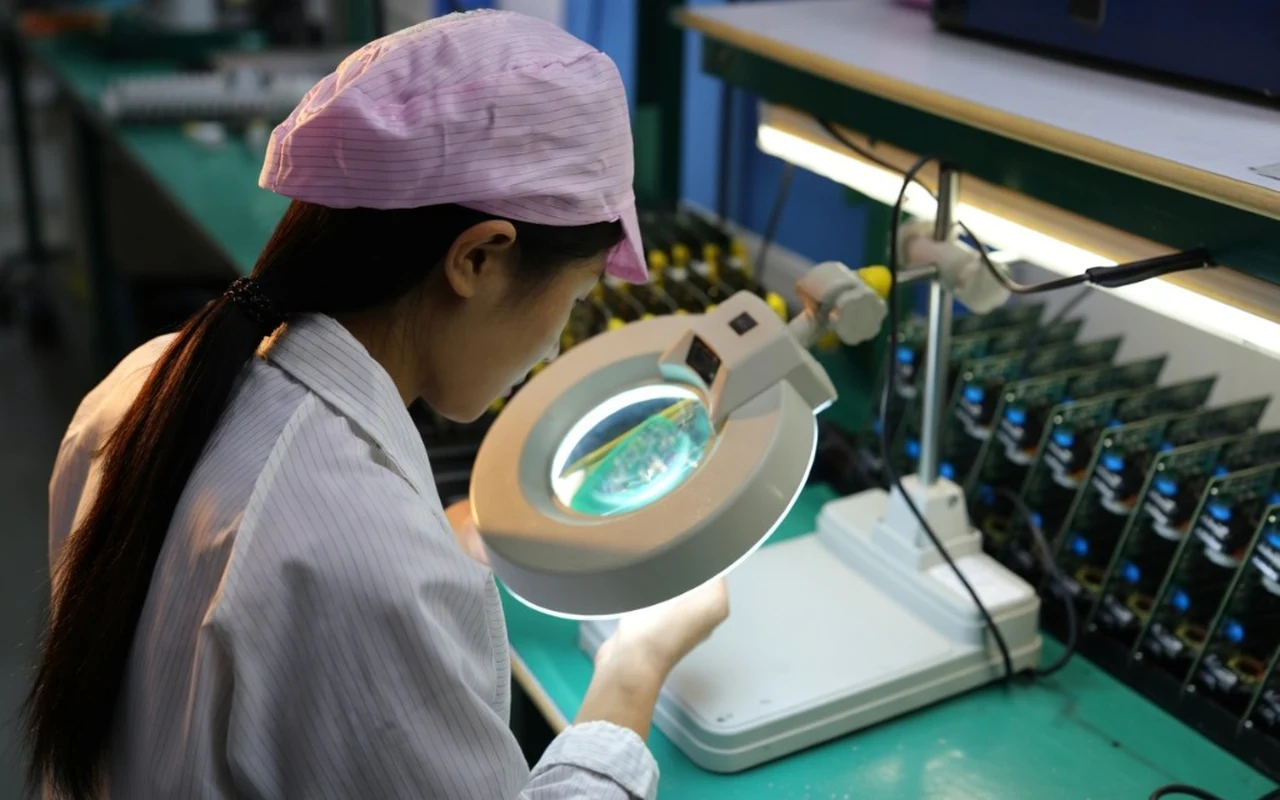
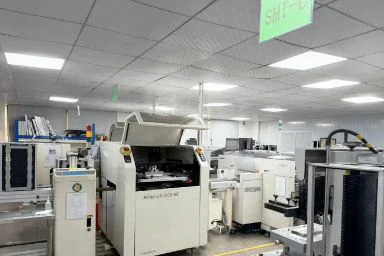
Controlled repeat setupLow-volume production benefits from stable feeder, program, stencil, and line-release records across revisions.Human review where it mattersInspection depth can be adapted to product risk without losing revision and lot visibility.
What to share for an accurate RFQ
Partial files can start a scope review. A complete package is required before a quotation can be treated as complete rather than assumption-based. Use the PCB assembly quote package checklist if you want a printable input list.
Returning with a revised BOM? Use the BOM version comparison to list added, removed, and changed components by reference designator. Send the previous and proposed revision identifiers with any change report you choose to share. The report does not approve substitutions or release the next lot; confirm each change and its approval scope before purchasing.
Minimum manufacturing data
Gerber or ODB++ plus drill files, stack-up, copper weight, surface finish, and panel notes
BOM with manufacturer part numbers, package, quantity, approved alternates or no-substitute lines, and lifecycle notes if known
Centroid or pick-and-place data and the assembly drawing with polarity
First-lot quantity, possible repeat range, and whether this is prototype, pilot, bridge, or recurring demand
Firmware filename or checksum if programming is in scope, plus test method and pass/fail limits
Label, serialization, packaging, destination, and Incoterm notes
Approvals that must be named
Who may approve an alternate part for this lot versus the default BOM
Whether a one-lot shortage substitute can ship without becoming the released BOM
Whether first-article hold applies before the remaining quantity is released
Whether fixture cost is in scope at this quantity, or visual/AOI/flying probe is accepted
Which records must follow the boards: inspection, test log, traceability, or packing photos
Input
Minimum useful fields
If missing
Gerber or ODB++
Fabrication data, drill, stack-up, finish, and any panel or keep-out notes.
We can review intent, not a buildable PCB quote.
BOM
MPN, package, quantity per board, AVL/alternates, and no-substitute flags.
Sourcing risk and unit cost stay as assumptions.
Centroid and drawing
Placement coordinates, polarity, and revision matching the Gerber/BOM set.
First-article polarity and program setup cannot be frozen.
Test and firmware
Method, coverage, numeric limits, and the firmware image identifier if used.
Test coverage, setup cost, and acceptance remain open until the method and limits are agreed.
A shortage substitute is not the default BOM. Temporary substitutions need a named lot-specific approval; use the alternate-part qualification workflow before purchasing starts.
How the manufacturing workflow runs
The workflow is built to reduce uncertainty before production release and keep useful records for repeat orders.
1
NPI intake
We review product stage, target lot size, forecast, and the reason for low-volume demand.
2
Build plan
DFM, sourcing, fixture, and test assumptions are matched to risk and expected repeatability.
3
Pilot production
First-article approval and line records are captured before the remaining quantity is released.
4
Ramp feedback
Yield, sourcing, test, and change notes are organized so the next lot starts cleaner.
How we make low-volume builds repeatable
Shipping the first lot is only part of the job. First-article evidence, test scope, approved changes, and lot records should make the next order easier to quote and safer to build.
Documented assumptions
Quote notes identify what is fixed, what is still pending, and what may change at larger volume.
First-article confirmation
For builds with an agreed first-article hold, confirm the released data, materials, setup, inspection and test evidence before the named approver releases the remaining quantity. Follow the first article inspection workflow and the editable FAI checklist.
Test strategy by risk
Visual inspection and AOI check visible assembly conditions within the inspection program. Flying probe and fixture-based ICT add electrical checks; FCT exercises the agreed product functions. Select coverage and tooling against access, quantity, repeat demand, and failure risk.
Repeat build records
BOM, alternates, process notes, and lot results remain usable for the next order.
Test scope
Where it can fit
What it does not prove
Visual / AOI
Placement, polarity, and visible solder checks within a defined inspection program.
Communications, current draw, firmware, or sensor behavior.
Flying probe
Accessible nets and components in changing or small-lot designs, usually without a dedicated bed-of-nails fixture.
Product-level functions that the test program does not exercise.
Fixture-based ICT
Repeat builds where test access and throughput justify a dedicated fixture and program.
Functions or inaccessible circuitry outside the released test coverage.
Functional test (FCT)
Agreed interfaces, loads, firmware, and numeric operating limits; fixture needs depend on the procedure.
Functions outside the released procedure, limits, loads, and firmware image.
Conditions that change low-volume timing
This page does not publish a fixed calendar lead time. Timing is confirmed after the available files, material risk, first-article hold, and test scope are reviewed.
Condition
Why timing moves
What to freeze before production
File revision after quote
Gerber, BOM, centroid, firmware, or test changes reopen DFM, stencil, and program work.
One release identifier for the lot that will actually be built.
Critical-part shortage
Long-lead MPNs or missing AVL lines stop kitting until a substitute is approved.
Named alternate approval or a documented one-lot deviation.
First-article hold
Where a hold is agreed, the remaining quantity waits for approval of the specified setup, inspection, and test evidence.
Who signs the release and which checks must pass.
Fixture, coating, or firmware
Unfinished FCT fixtures, conformal coating, or unsigned firmware add process steps after SMT.
Whether those steps are in this lot or deferred.
Low-volume output that supports the next order
A small lot should still produce useful records. The goal is to make the next pilot or repeat batch easier to quote and safer to build.
Practical deliverables
Pilot-lot manufacturing assumptions and open risks
BOM availability, alternates, and shortage review
First-article feedback before full lot release
Test depth recommendation by quantity and product risk
Repeat-build notes for the next purchase order
Decision evidence
Pilot assumptionsBOM risk notesFirst-article reviewRepeat-build record
Buyer question
How this service answers it
When it matters most
Lot purpose
Prototype, pilot, bridge, and recurring lots need different controls.
Use when the quantity is small but the business decision is important.
Fixture choice
Fixture cost is weighed against repeat demand and failure risk.
Use when test consistency may matter more than the first-lot unit price.
Ramp readiness
Records are kept so the next build is not restarted from zero.
Use when low volume may turn into repeat production.
Sourcing strategy
Short-run cost and lead time are reviewed with future availability.
Use when annual demand is uncertain but supply risk is real.
Low-volume mistakes that become expensive later
Short runs often hide future production problems. We try to expose them while correction is still easy.
Risks to clarify
Prototype-only parts selected without lifecycle review
No approved alternates for supply-sensitive components
Test coverage too shallow for field reliability expectations
No first-article feedback loop before full pilot quantity
Fixture decisions postponed until repeat orders become urgent
Packaging and serial labels not considered until shipment
A low-volume RFQ should include both the first order quantity and the possible annual forecast. That lets us choose a better sourcing and test strategy.
FAQ
What quantities count as low-volume PCB assembly? It depends on board complexity and setup effort, but low-volume usually means pilot, bridge, or early recurring lots before mature volume demand.
Is low-volume assembly more expensive per unit? Usually yes, because setup, sourcing, test, and engineering review are spread over fewer units. We make those cost drivers clear.
Can low-volume builds later move into production? Yes. That is why we keep revision, material, process, and quality records structured from the beginning.
Can you build multiple variants in one low-volume order? Yes, if the BOM and revision mapping are clear. We separate variant rules before production.
Should I invest in a test fixture for low volume? It depends on risk, repeat demand, and failure cost. We can quote both fixture and non-fixture options when appropriate.
Plan your first low-volume lot
Send files, first quantity, expected repeat demand, and test expectations. We will recommend a practical build and documentation plan.
Partial files are welcome. Response timing and confidentiality arrangements are confirmed after the available scope is reviewed.