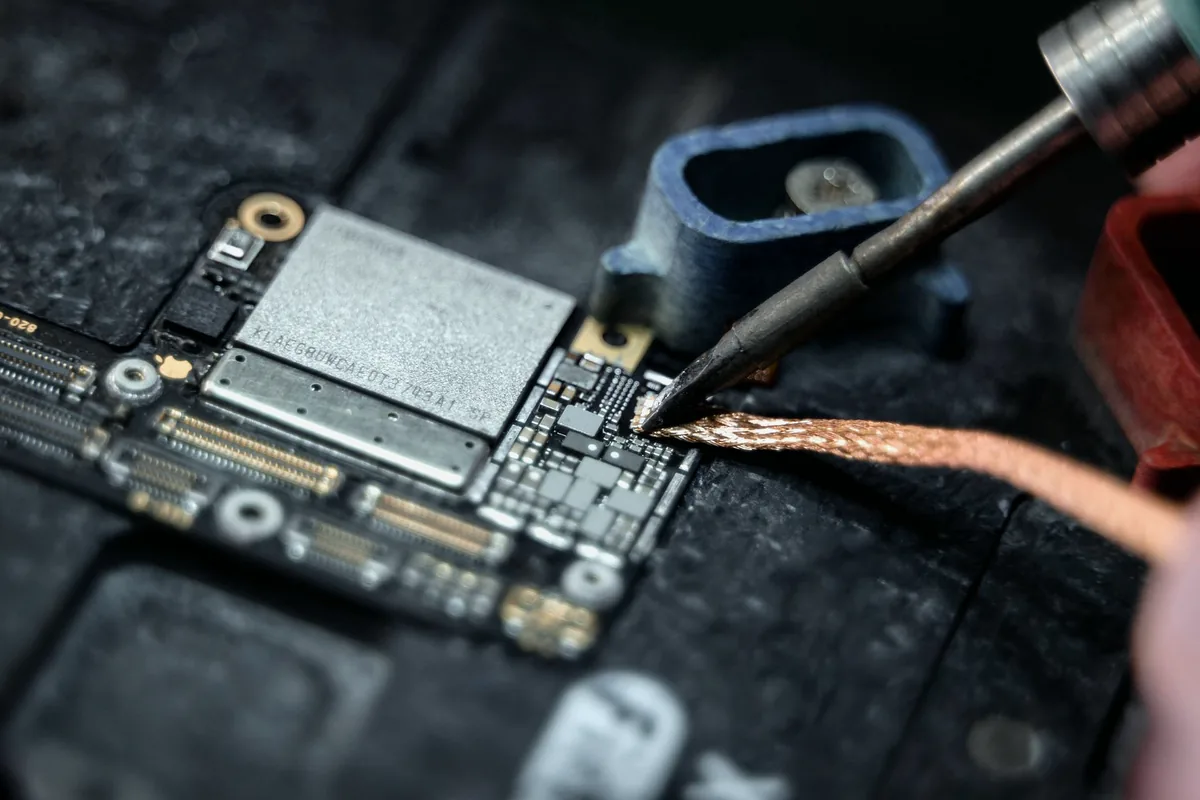
“No-clean” is a flux classification, not a universal instruction to skip cleaning. Whether residues are acceptable depends on the flux chemistry, amount and location of residue, process stability, board geometry, operating voltage, humidity, coating plan, test sensitivity, and product reliability requirement. A PCBA can look clean under normal lighting and still carry residues that matter in its real environment.
Buyers should define the cleanliness strategy before the quotation is finalized. Cleaning adds process steps, equipment, chemistry, masking, drying, handling, and validation. Leaving the decision until first article can create avoidable cost and schedule changes.
Start with the product environment and failure consequence
A dry indoor controller has a different risk profile from a board exposed to condensation, salt, industrial contamination, high impedance sensing, high voltage spacing, or long unattended service. Identify the expected temperature and humidity range, contamination exposure, coating requirement, and acceptable field-failure risk.
The decision should also consider board design. Tight spacing under low-standoff components can trap process residues and cleaning fluid. High-impedance analog circuits may be more sensitive to leakage than ordinary digital logic. Connectors, microphones, switches, displays, labels, and unsealed components may need protection from the cleaning process.
Separate visual acceptability from process validation
Visual inspection can identify obvious residue, staining, corrosion, or handling contamination, but it cannot by itself prove that the process is safe for the intended product. IPC explains that IPC-A-610 provides post-assembly acceptance criteria, while J-STD-001 addresses soldering process and material requirements; the two are intended to work together. See IPC's official explanation of the current standards in its J-revision announcement.
A useful buyer specification therefore has two layers: workmanship acceptance and evidence that the selected materials and process remain controlled.
Decide among no-clean, localized cleaning, and full cleaning
- No-clean process: appropriate only when the flux, process window, residue location, end-use environment, and customer requirement support leaving residues in place.
- Localized cleaning: useful after hand soldering or rework, but it must not spread dissolved residue into neighboring areas or leave lint and solvent marks.
- Full cleaning: may be selected for higher-risk products, coating preparation, cosmetic requirements, or processes whose residues are not intended to remain.
The choice is not simply “cleaner is better.” An uncontrolled cleaning process can introduce trapped moisture, incompatible chemistry, component damage, label degradation, or incomplete drying.
Specify the evidence, not only a cleanliness number
A single ionic contamination number can be useful for process monitoring, but it may not identify where residue is located or whether a particular circuit is at risk. The validation plan should match the product and process. Buyers may need a combination of material declarations, controlled profiles, visual inspection, extraction testing, localized analytical methods, surface insulation resistance testing, or product-specific environmental evidence.
IPC's technical education on validating flux and process residues emphasizes matching test methods to production assemblies and reliability needs. The RFQ should ask which method is used, what it proves, how often it is run, and what action follows an out-of-control result.
Cleaning must include rework and hand-solder operations
A validated SMT process can be undermined by later manual operations. Hand soldering, wire attachment, connector replacement, BGA rework, and touch-up may use different flux or leave a different residue volume. The traveler should define approved materials and post-operation cleaning for every process step, not only the main reflow line.
Ask the supplier to record rework locations and materials for reliability-sensitive builds. If conformal coating follows, define the time between cleaning and coating, allowable handling, masking removal, inspection, and dryness verification.
Design and panel choices affect cleanability
Low standoff height, large bottom-terminated components, dense shielded areas, edge connectors, and deep mechanical pockets can make residues difficult to remove and difficult to verify. Panel rails and breakaway features can also trap contamination or create debris during depanelization.
A DFM review should flag components that cannot tolerate the selected chemistry or wash method. It should also identify areas where cleanliness is especially important, such as high-voltage nodes, high-impedance sensing circuits, test contacts, optical paths, and coating adhesion zones.
Questions to include in a cleaning RFQ
- What fluxes and solder materials will be used at reflow, wave/selective solder, hand solder, and rework?
- Are residues intended to remain, be locally removed, or be fully cleaned?
- Which components, labels, or mechanical parts are incompatible with the cleaning process?
- How is the cleaning process monitored and what test method supports the chosen acceptance?
- How are boards dried, handled, stored, and protected before conformal coating or packaging?
- What records will be available for first article and repeat production?
When coating follows cleaning, connect the cleanliness release to the conformal coating process validation plan so masking, application, cure, inspection, and lot evidence use the same controlled board revision.
Practical takeaway
Do not copy a generic ionic limit into a drawing without understanding how it will be measured and what risk it controls. Define the product environment, flux system, cleaning decision, sensitive areas, rework controls, validation method, sampling plan, and required records as one strategy.
PCBA PARTNER can review cleaning and reliability requirements alongside assembly, test, coating, and packaging scope. Include the environment and cleanliness expectations in your RFQ package so the process can be evaluated before material and schedule commitments are made.
If coating follows cleaning, align the cleaning release record with the coating process validation plan, including the specified masking, cure and inspection requirements.