HOME-10 · Connected Home
Connected Water Purifier Power and Control PCBA
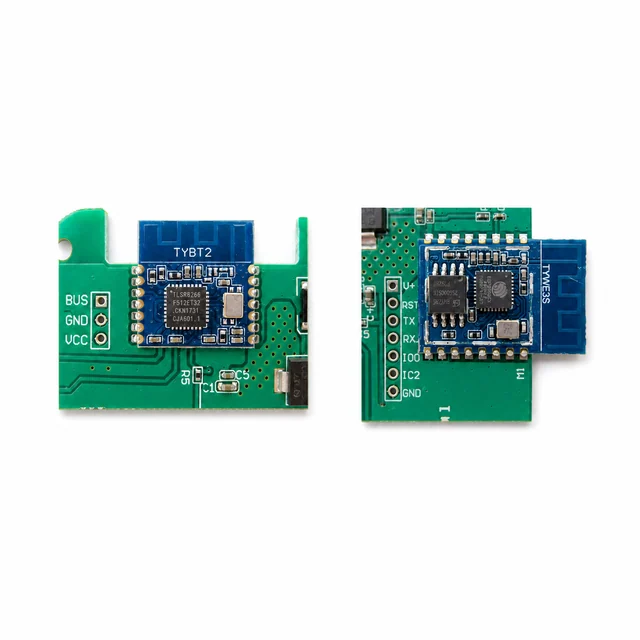
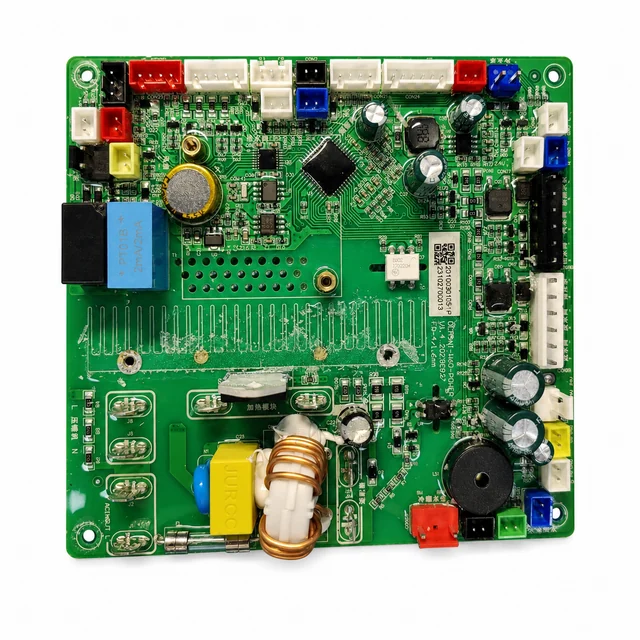
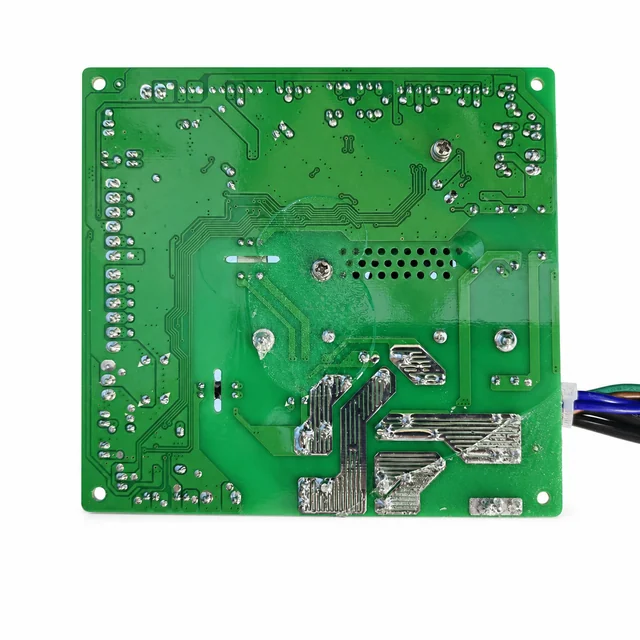
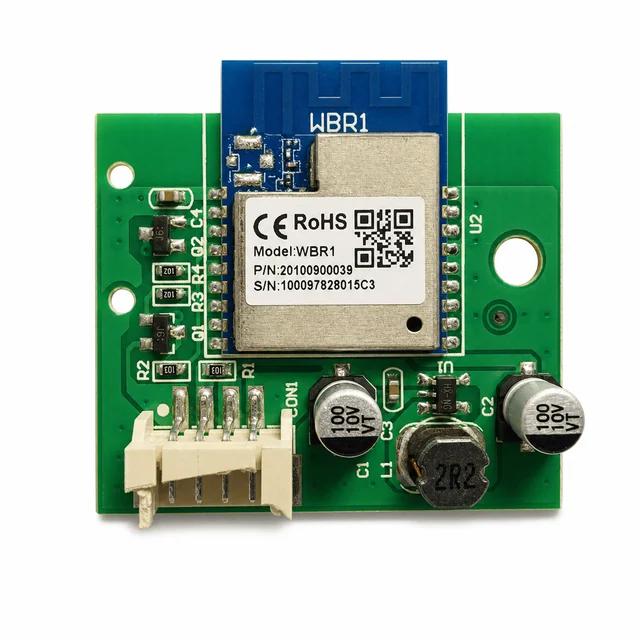
An FCC-photo reference showing an integrated W60 main board with ACINPUT, L/N, 24V and heating-related markings, protected power sections, repeated output circuits, and a separate WBR1 wireless board.
Project context
How this product is typically engineered
An FCC-photo reference showing an integrated W60 main board with ACINPUT, L/N, 24V and heating-related markings, protected power sections, repeated output circuits, and a separate WBR1 wireless board.
System architecture
Typical architecture
A representative system converts mains into a 24 V actuator bus and low-voltage logic rails, reads flow, level, pressure, TDS, temperature, or leak inputs, sequences pumps and valves, supervises any heating channel, and exchanges status with a plug-in wireless module.
Engineering risks to resolve
Decisions to close before release
- Maintain mains isolation and reliable pump, valve, and heating control beside water and condensation.
- Detect dry operation, leakage, blocked flow, stuck outputs, and conflicting sensor states before damage occurs.
- Prevent inductive transients and heavy-load switching from corrupting analog water-quality sensing or connectivity.
Validation plan
Checks to define before production
- Inject pump stall, valve open and short, low pressure, dry heat, temperature-sensor, leak, and flow faults.
- Verify applicable dielectric, insulation, leakage-current, surge, EFT, ESD, load-life, and full-load thermal behavior.
- Calibrate supported flow, temperature, and TDS channels and test condensation, power cycling, weak networks, and interrupted updates.
What to put in the RFQ
Files and records to agree before quoting
Use this list to agree the build inputs and release records for a similar product. The final set depends on the project.
Design baseline
Released schematic or block diagram, interface table, power states, critical constraints, and revision owner.
Manufacturing release
Gerber or ODB++, stack-up, centroid data, assembly drawings, approved DFM dispositions, and panel assumptions.
Material control
Released BOM revision, manufacturer part numbers, AVL or alternate rules, no-substitute lines, MSL handling, and exception approvals.
Validation record
Test method, acceptance criteria, sample or serial identity, measured result fields, and disposition. Example scope: Inject pump stall, valve open and short, low pressure, dry heat, temperature-sensor, leak, and flow faults.
Production release
First-article status plus the agreed SPI, AOI, X-ray, ICT, FCT, programming, rework, OQA, labeling, and packing records.
During RFQ review, we confirm the required fields, sampling, limits, approvals, and record-retention period. Confidential project information stays within the agreed access rules.
Development and production controls
Typical manufacturing scope
- Mains-to-24 V appliance power control.
- Pump, valve, heater, and sensor integration.
- Replaceable wireless-module architecture.
Technical image review
Board-level evidence
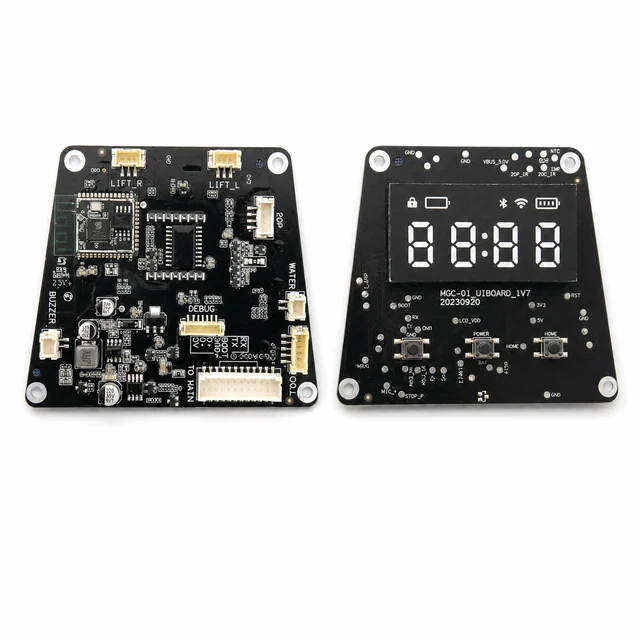
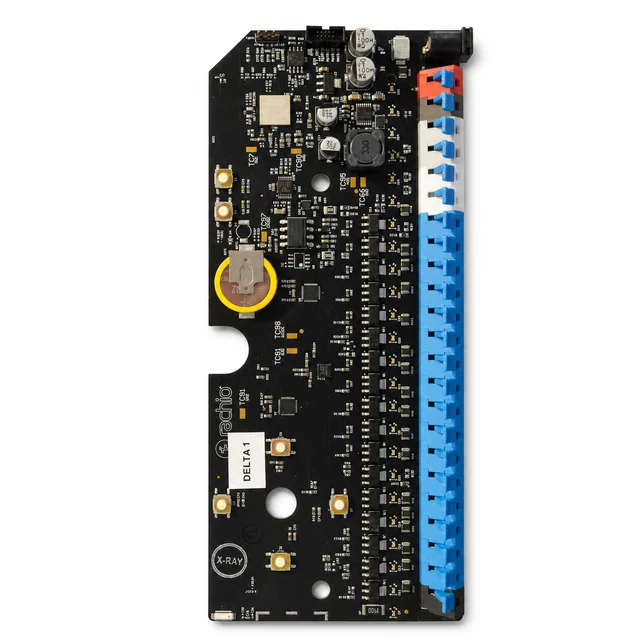
White-background views are published to make component placement, interfaces and assembly boundaries easier to inspect.