HOME-03 · Connected Home
16-Zone Smart Irrigation Controller PCBA
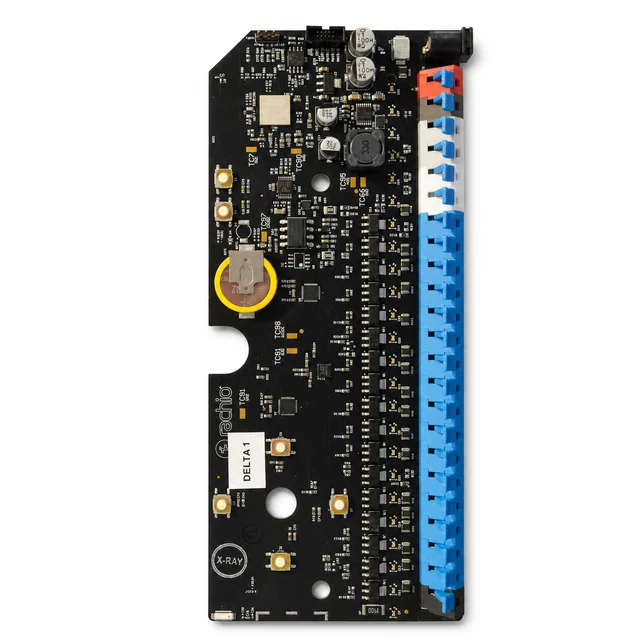
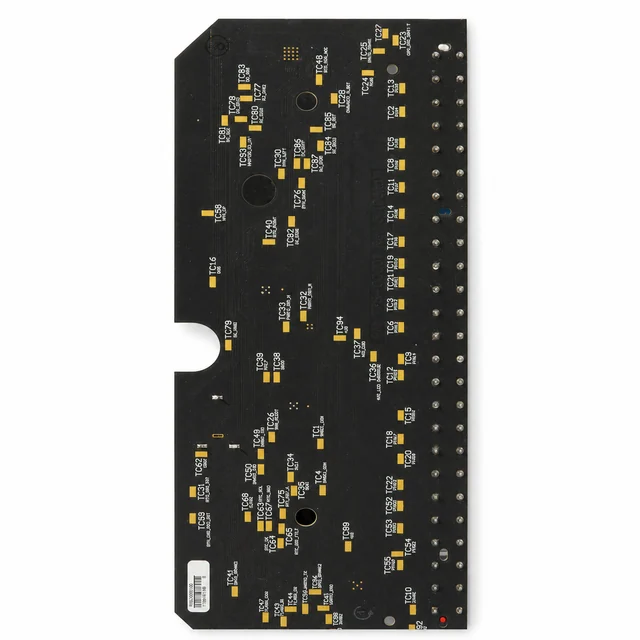
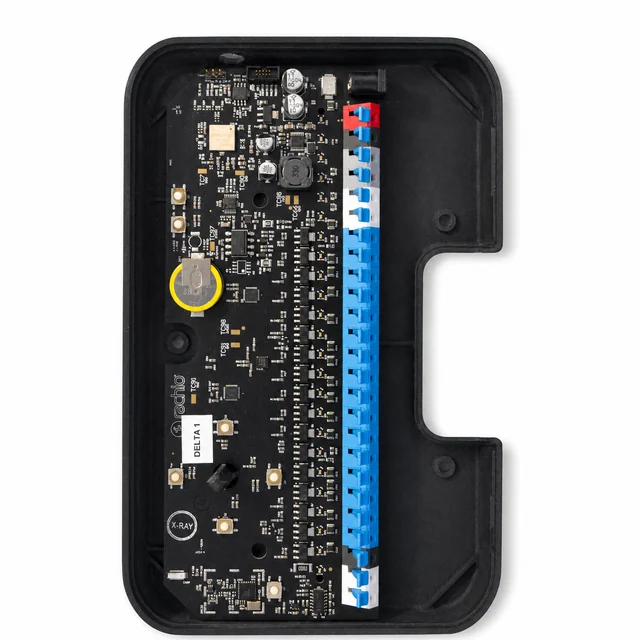
An FCC-photo reference showing a large 16-zone controller with dense field-wiring terminals, repeated output stages, a backup-cell location, local controls, and extensive test pads.
Project context
How this product is typically engineered
An FCC-photo reference showing a large 16-zone controller with dense field-wiring terminals, repeated output stages, a backup-cell location, local controls, and extensive test pads.
System architecture
Typical architecture
A typical irrigation controller converts an external supply into logic rails, schedules mutually managed zone outputs, drives long-cable solenoid loads, and can supervise rain, flow, common, or master-valve signals while retaining local timing during network loss.
Engineering risks to resolve
Decisions to close before release
- Protect repeated inductive outputs and logic ground from long-wire surge and lightning transients.
- Detect open, shorted, or overloaded valves without nuisance trips or adjacent-channel coupling.
- Maintain reliable schedules, RTC state, and safe maximum run times through outages and weak connectivity.
Validation plan
Checks to define before production
- Exercise all 16 channels individually and in permitted combinations with correlated valve loads.
- Test open and short circuits, long-line inductive transients, supply variation, RTC drift, and repeated power loss.
- Run surge, ESD, EFT, damp-heat, freeze-thaw, terminal-cycle, weak-network, and interrupted-update testing.
What to put in the RFQ
Files and records to agree before quoting
Use this list to agree the build inputs and release records for a similar product. The final set depends on the project.
Design baseline
Released schematic or block diagram, interface table, power states, critical constraints, and revision owner.
Manufacturing release
Gerber or ODB++, stack-up, centroid data, assembly drawings, approved DFM dispositions, and panel assumptions.
Material control
Released BOM revision, manufacturer part numbers, AVL or alternate rules, no-substitute lines, MSL handling, and exception approvals.
Validation record
Test method, acceptance criteria, sample or serial identity, measured result fields, and disposition. Example scope: Exercise all 16 channels individually and in permitted combinations with correlated valve loads.
Production release
First-article status plus the agreed SPI, AOI, X-ray, ICT, FCT, programming, rework, OQA, labeling, and packing records.
During RFQ review, we confirm the required fields, sampling, limits, approvals, and record-retention period. Confidential project information stays within the agreed access rules.
Development and production controls
Typical manufacturing scope
- Scalable multi-zone output control.
- Field-wiring protection and diagnostics.
- Offline scheduling and RTC integration.
Technical image review
Board-level evidence
White-background views are published to make component placement, interfaces and assembly boundaries easier to inspect.