Receipt and fit check
After the server confirms receipt, a standard-scope inquiry is reviewed for service fit within 48 working hours.
One agreed scope for design and manufacturing handoff
Start with an idea, electronics package, mechanical CAD or an existing product. We define the right paid engineering stage, coordinate the disciplines and keep one commercial owner accountable for the agreed scope.
The customer supplied the concept, style direction and reference sample. We handled subsequent design, feedback iterations, prototypes, validation, tooling and production.
Choose your starting point
Choose the closest starting point. The selection carries into the design inquiry and can be changed before submission.
Before you send
Start with a non-confidential brief. We use it to confirm fit, identify missing inputs and define the right commercial next step before asking for sensitive project files.
After the server confirms receipt, a standard-scope inquiry is reviewed for service fit within 48 working hours.
We identify the non-confidential information needed for a useful review. If sensitive files are required, request an NDA before sharing them.
We respond with a no-fit explanation or referral, a paid feasibility sprint, or a bounded scope-of-work and stage proposal.
Scope boundary: the initial fit review is not free detailed engineering and is not a formal quotation. Price and schedule are confirmed only after scope, inputs, assumptions and acceptance criteria are defined.
Quotable service packages
Each proposal defines inputs, outputs, included rounds, schedule, approval gates, acceptance criteria and exclusions. Unclear projects begin with a paid feasibility sprint, not an open-ended design promise.
Turn concept into a controlled brief, architecture and commercial-ready development plan.
Create a coherent exterior direction tied to user, brand, controls and manufacturing constraints.
Develop manufacturable structure, assembly, sealing, thermal paths and product interfaces.
Connect the product architecture to schematic, PCB layout, embedded software and app requirements.
Carry the approved design through samples, validation, tooling, certification coordination, packaging and production release.
Controlled development process
Each gate records the approver, version and unresolved items. Customer-requested changes after an approved gate are handled through a written Change Request with schedule and cost impact.
Revision policy: we work toward documented acceptance criteria and respond to consolidated customer feedback within the included rounds. “Unlimited revisions until satisfied” is not used because it creates unclear responsibility, schedule and acceptance.
Commercial model and risk boundary
We are the single accountable signatory for the approved scope, timeline and final handoff. Controlled partners can execute specialised analysis, molds, tests or manufacturing support, but PCBA PARTNER remains commercially accountable.
Confidential files are only exchanged after NDA completion. Before NDA, we only accept non-confidential summaries and reference inputs. After NDA, files are shared in controlled links with access time limits, upload records and retention policy.
We can run up to 5 concurrent full design programs while preserving response quality. For standard projects, initial fit review is normally delivered within 48 working hours.
Deliverables and ownership
The contracted project IP and deliverables transfer after full payment under the SOW and IP schedule. Pre-existing know-how and properly licensed third-party assets remain subject to their stated terms.
We handle design, prototype, validation, tooling, certification coordination and manufacturing handoff inside the signed scope. Third-party certification outcomes, specialized test lab liabilities, unrelated software/platform services and late scope expansion follow written add-on scope and acceptance.
Prototype strategy
SLA, CNC PU/ABS or equivalent presentation samples for scale, grip, controls and visual review.
FDM, SLS, MJF, CNC, sheet metal or vacuum casting for assembly, clearance and fastening checks.
Development boards, quick-turn PCB and SMT build for architecture, interface and bring-up risk.
Combined electronics and mechanical sample to close core engineering functions and interfaces.
Production-intent samples, tooling and process validation against the agreed verification plan.
Structure, protection, labeling and shipment presentation before production packing release.
Public project evidence
For each project, the customer supplied the initial concept, desired style and reference sample. PCBA PARTNER handled the subsequent development, customer-feedback iterations, prototype, validation, tooling and production.
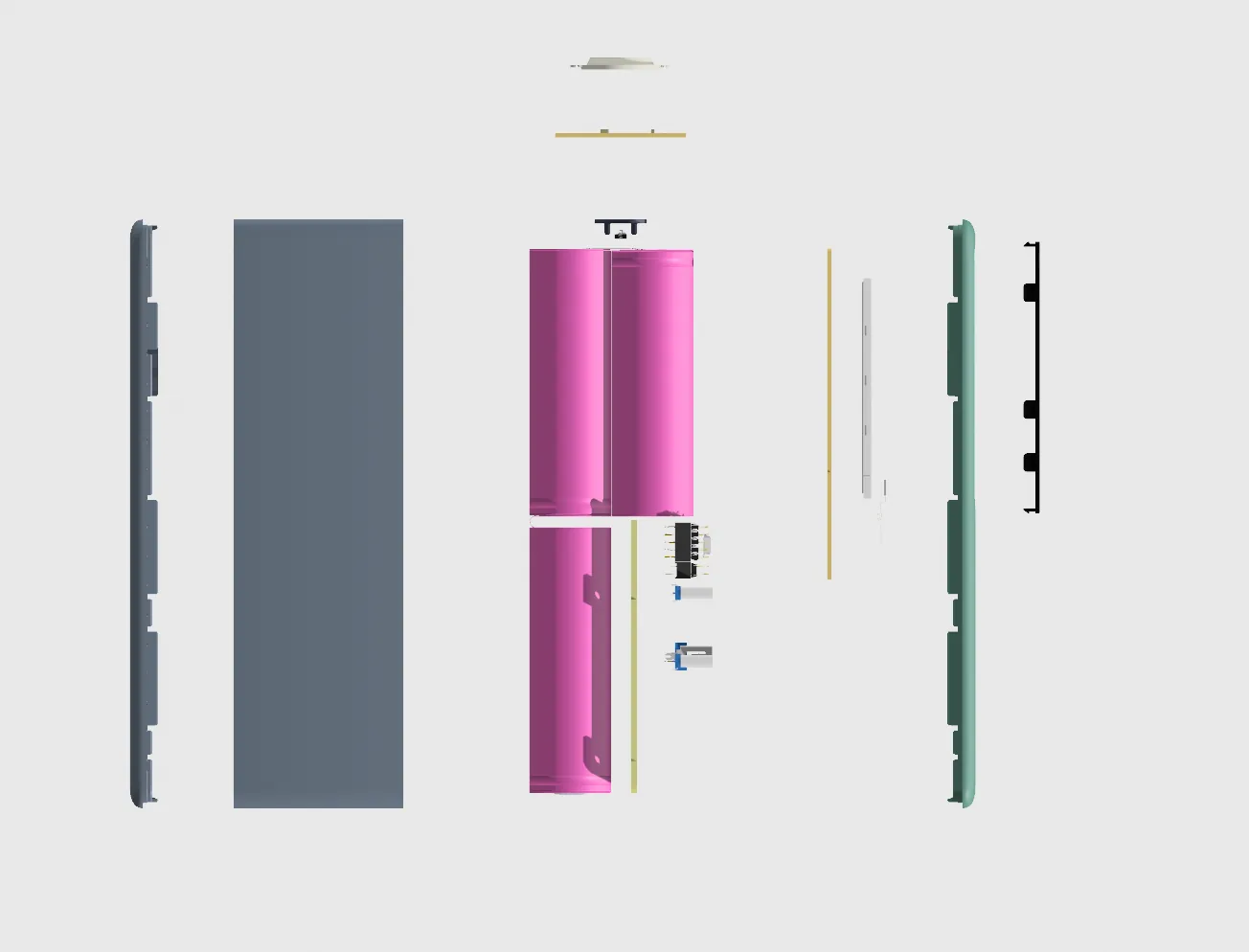
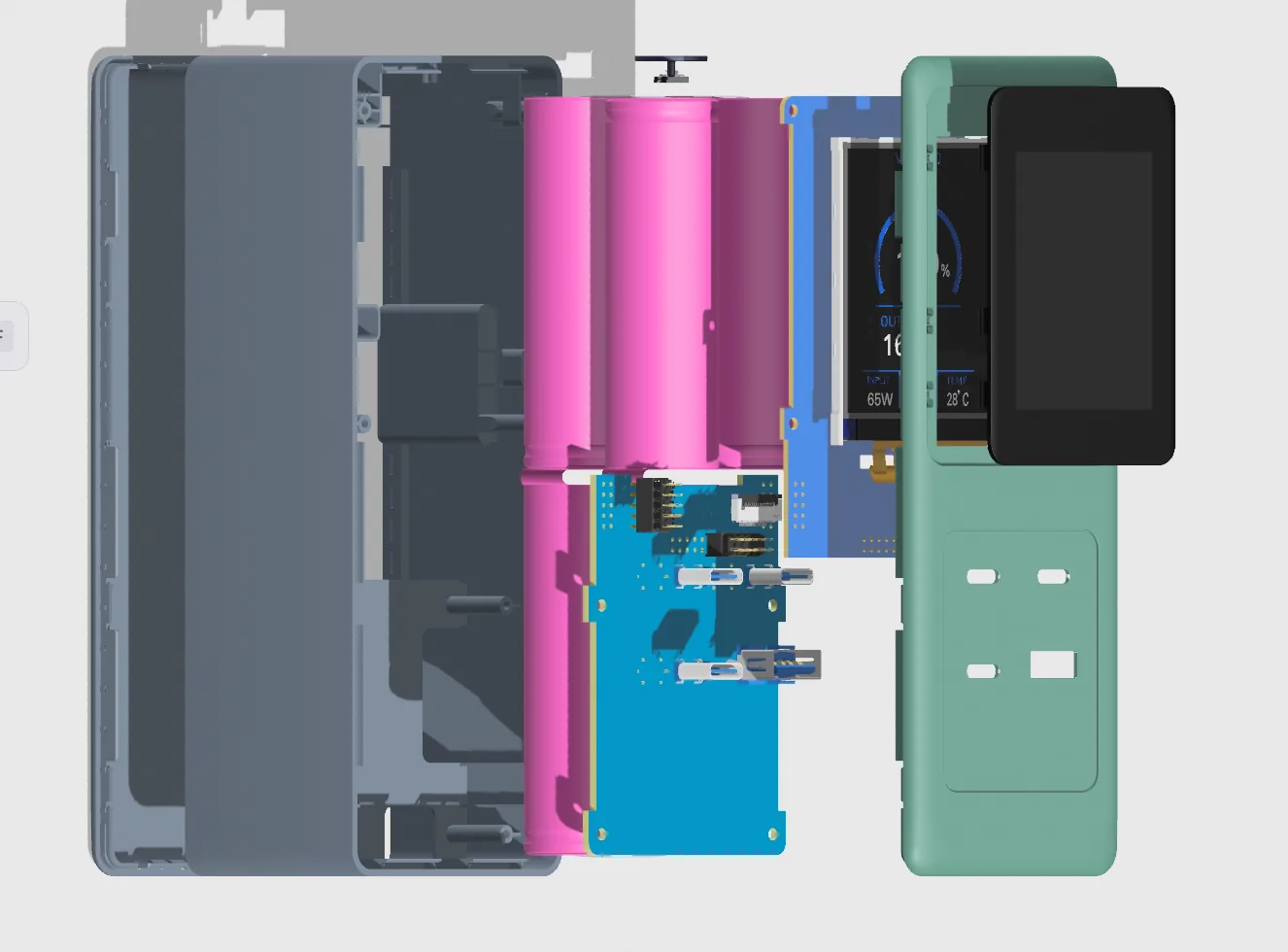
Industrial design, internal packaging and full product integration around batteries, PCB, display, connectors and enclosure.
The exploded view shows how the enclosure, cells, PCB and display fit together.
Inspect the project drawing →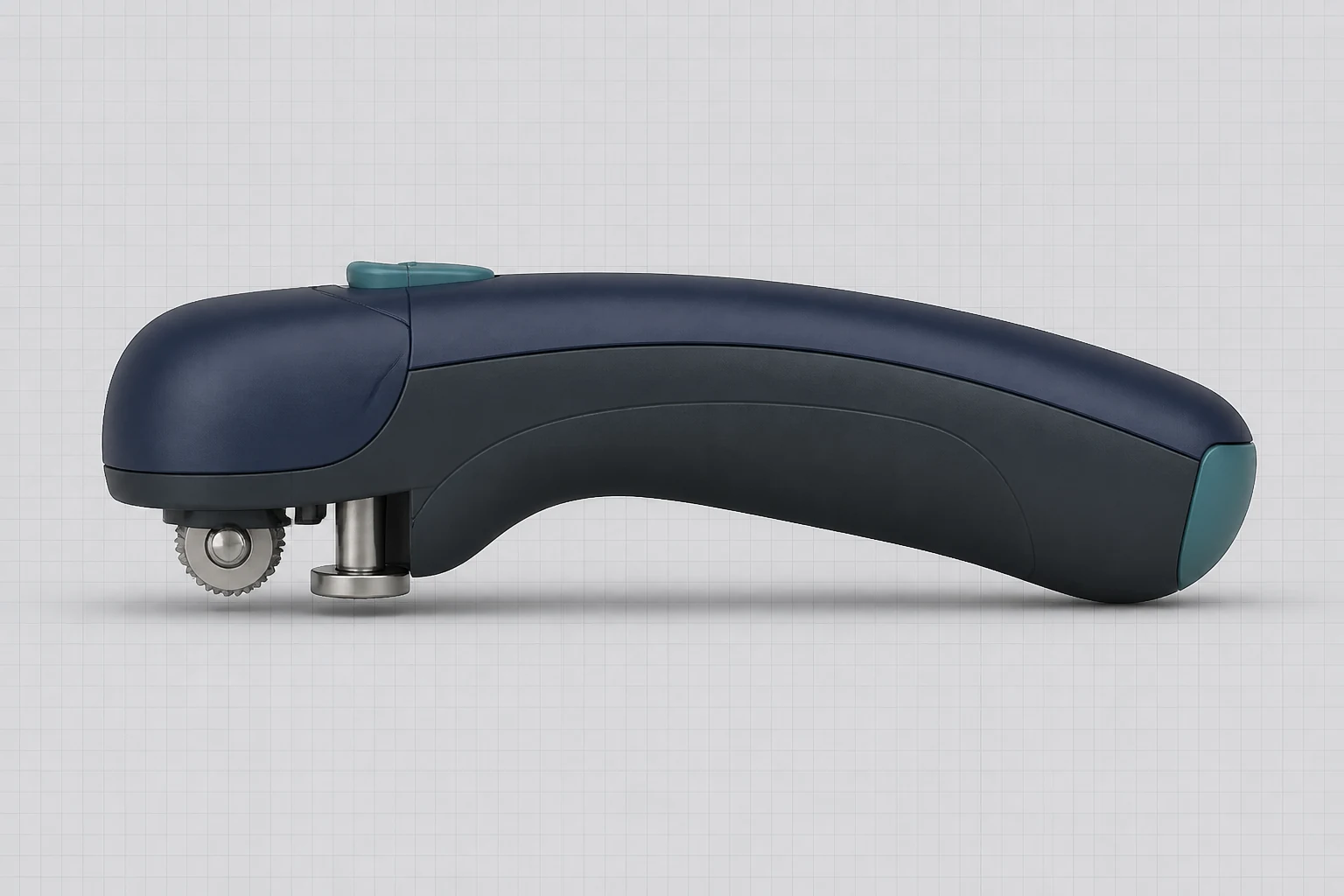
Human-centered exterior surfacing, control placement, housing split and mechanical development for manufacturable assembly.
The CAD view shows the housing surfaces, control area and housing split.
Inspect the project drawing →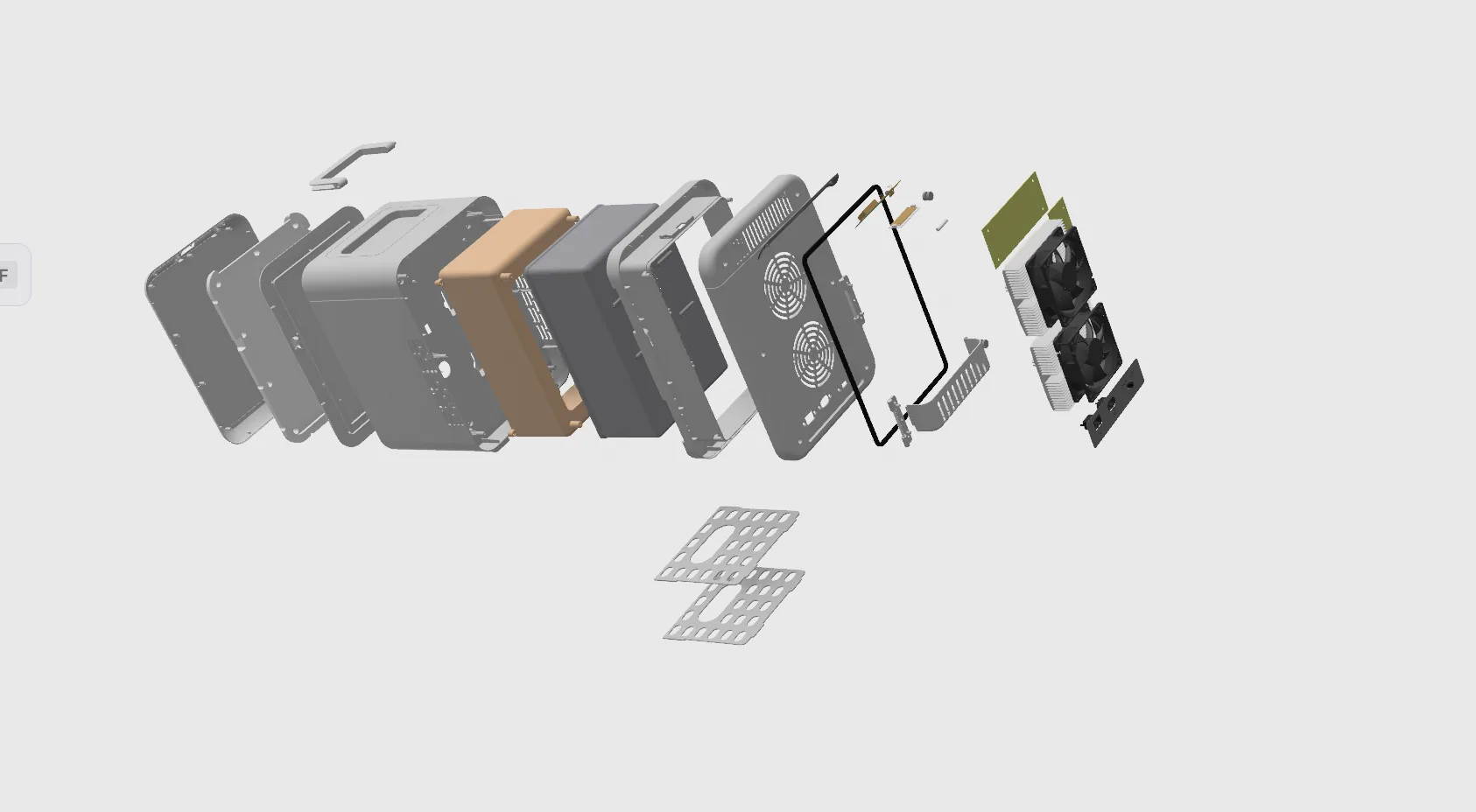
Multi-layer enclosure and thermal-system packaging across liners, frames, heat-transfer parts, fans, PCB and final assembly.
The exploded view shows the enclosure, frame, fans, thermal components and electronics layout.
Inspect the project drawing →The drawings document design and assembly work. Published material does not include performance test results, production quantities or customer acceptance records.
Buyer questions
Yes. A fit review identifies the right stage and boundary. Projects without stable requirements begin with a paid feasibility sprint rather than open-ended output.
PTC Creo / Pro E and Siemens NX / UG are primary. Deliverables can include agreed native source files plus STEP/STP and required exchange formats.
Yes, when included in SOW. That includes schematic and PCB, firmware bring-up, and application integration with defined acceptance.
Yes. We separate simulation, engineering review, physical validation and certification support. Evidence is shown only after agreed test results and method are complete.
PCBA PARTNER remains the accountable prime for accepted scope. Specialist teams can execute targeted tasks, but project accountability and version control remain with PCBA PARTNER.
Yes. After full payment and under the IP schedule, we transfer the agreed package and allow customer manufacturing choice.
We keep at most 5 full design programs concurrent in stable review control, adjusted by complexity and specialist load. This protects response quality and fit-review windows.
Project IP and agreed deliverables transfer after full payment and milestone acceptance. Existing company templates, approved third-party licenses and non-transferrable licenses stay outside customer assignment unless contract says otherwise.
Tell us your starting point, target product, primary scope and production intent. Standard inquiries receive an initial fit review within 48 working hours; complex programs receive a formal review plan within that period.
PCBA PARTNER is operated by Dongguan Hepin Electronic Technology Co., Ltd.
Share your files, quantity and requirements.
Our team will review the details with you.