HOME-06 · Connected Home
Touchless Smart Trash Can Motion Control PCBA
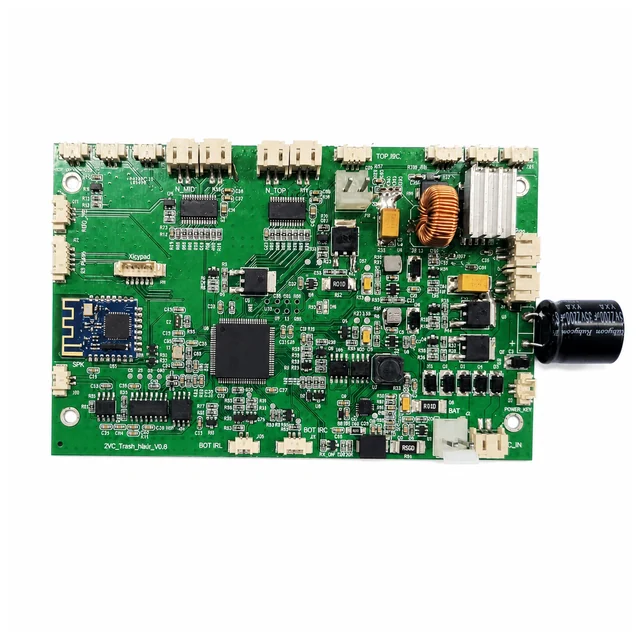
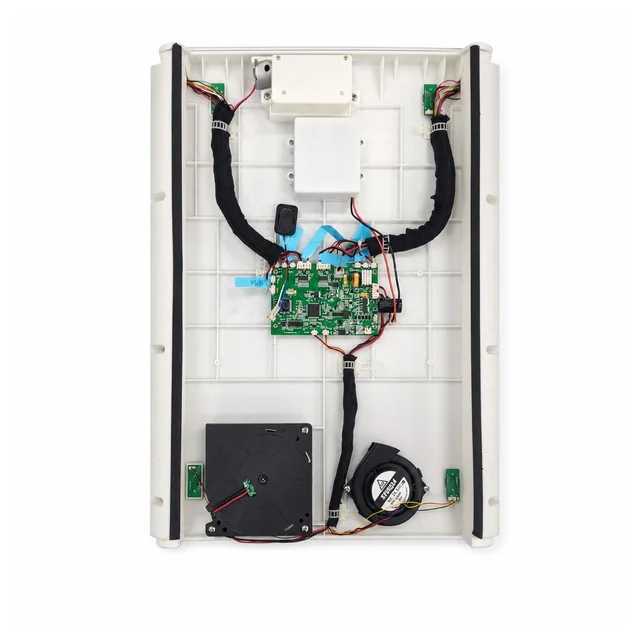
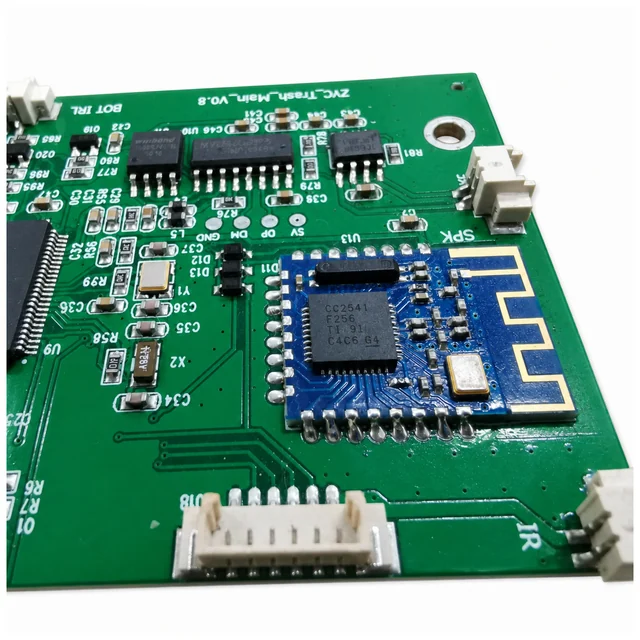
An FCC-photo reference showing a connector-rich HERO mainboard, labeled motor, keypad, battery and DC-input interfaces, a concentrated power stage, and a CC2541-based radio daughterboard.
Project context
How this product is typically engineered
An FCC-photo reference showing a connector-rich HERO mainboard, labeled motor, keypad, battery and DC-input interfaces, a concentrated power stage, and a CC2541-based radio daughterboard.
System architecture
Typical architecture
A representative low-voltage controller combines adapter or battery power management, proximity and position inputs, bidirectional lid-motor control, optional fan or auxiliary drives, and a local wireless command and status link.
Engineering risks to resolve
Decisions to close before release
- Detect obstruction and limit pinch force throughout automatic opening and closing.
- Separate motor-start and stall transients from low-power sensing and radio operation.
- Maintain connector, coating, and thermal reliability near moisture and corrosive waste gases.
Validation plan
Checks to define before production
- Measure obstruction force, stopping time, stall current, repeated starts, and interrupted-motion recovery.
- Exercise low-battery, adapter hot-plug, contradictory position inputs, and radio-command safety limits.
- Run opening-cycle endurance, condensation, corrosive-atmosphere, drop, vibration, ESD, EFT, and RF-blockage tests.
What to put in the RFQ
Files and records to agree before quoting
Use this list to agree the build inputs and release records for a similar product. The final set depends on the project.
Design baseline
Released schematic or block diagram, interface table, power states, critical constraints, and revision owner.
Manufacturing release
Gerber or ODB++, stack-up, centroid data, assembly drawings, approved DFM dispositions, and panel assumptions.
Material control
Released BOM revision, manufacturer part numbers, AVL or alternate rules, no-substitute lines, MSL handling, and exception approvals.
Validation record
Test method, acceptance criteria, sample or serial identity, measured result fields, and disposition. Example scope: Measure obstruction force, stopping time, stall current, repeated starts, and interrupted-motion recovery.
Production release
First-article status plus the agreed SPI, AOI, X-ray, ICT, FCT, programming, rework, OQA, labeling, and packing records.
During RFQ review, we confirm the required fields, sampling, limits, approvals, and record-retention period. Confidential project information stays within the agreed access rules.
Development and production controls
Typical manufacturing scope
- Bidirectional lid-motor control.
- Multi-sensor and keypad interfaces.
- Low-power wireless integration.
Technical image review
Board-level evidence
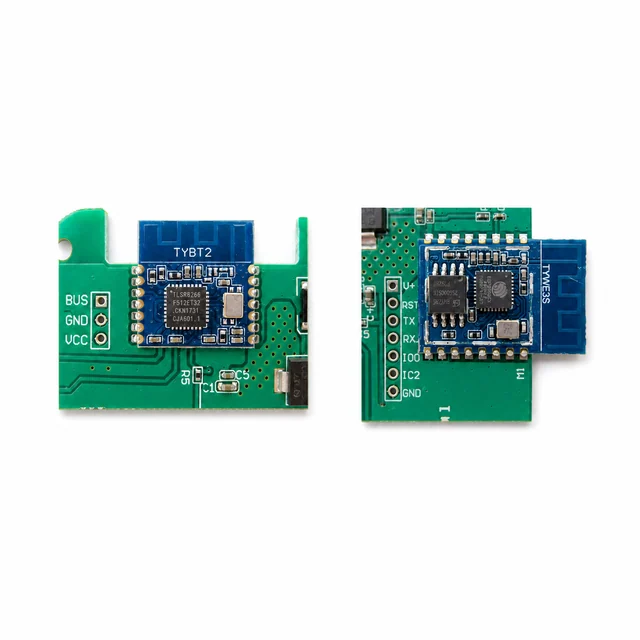
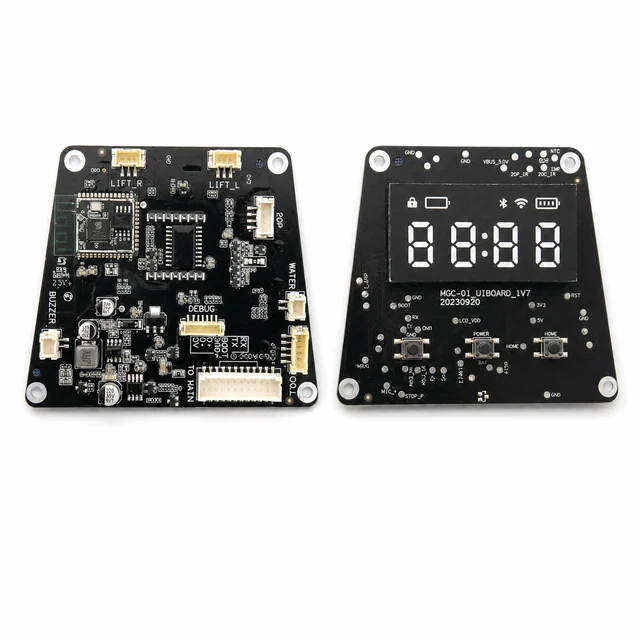
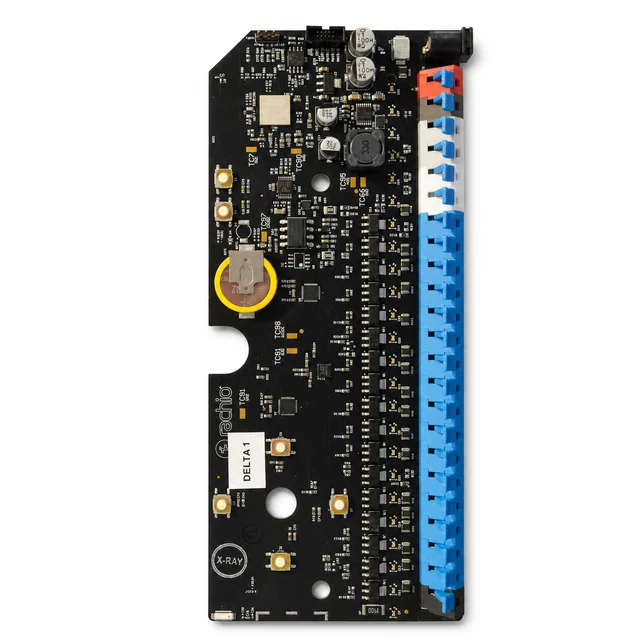
White-background views are published to make component placement, interfaces and assembly boundaries easier to inspect.