HOME-07 · Connected Home
Smart Toilet Safety Control and Application PCBA Set
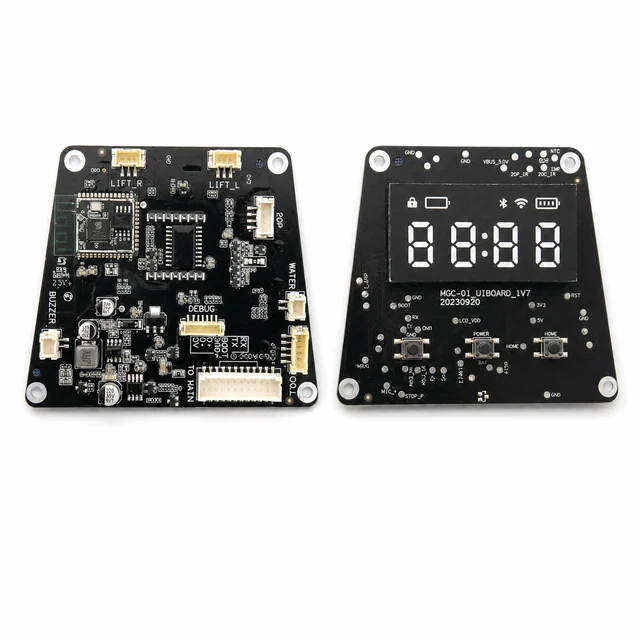
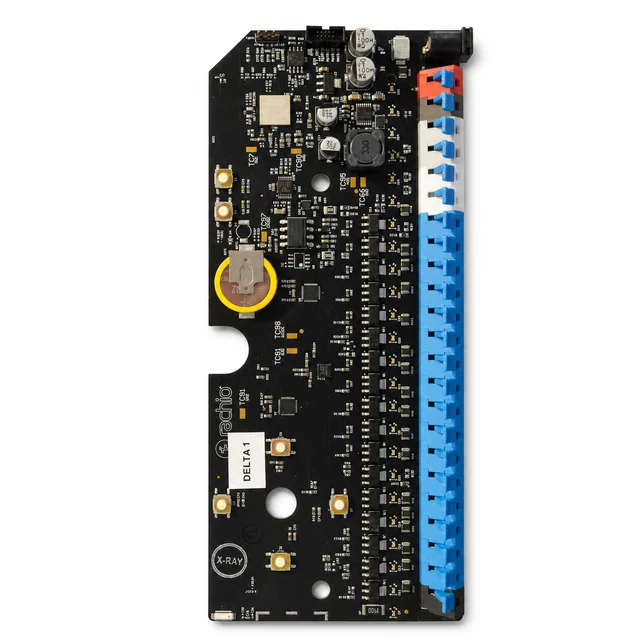
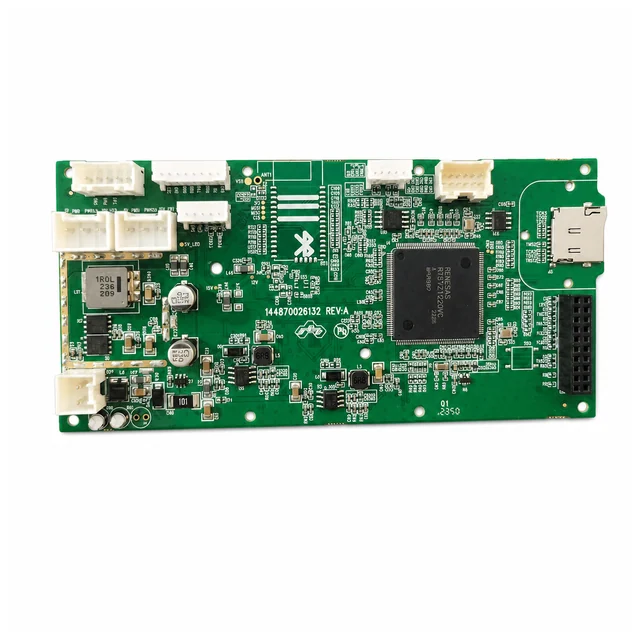
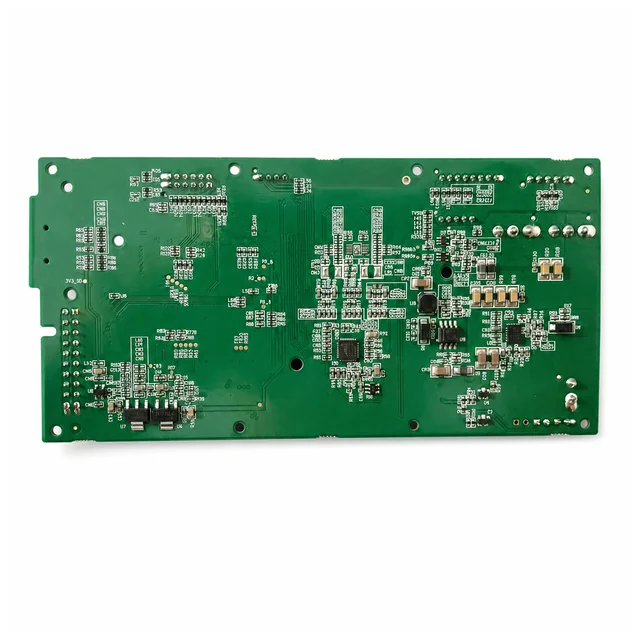
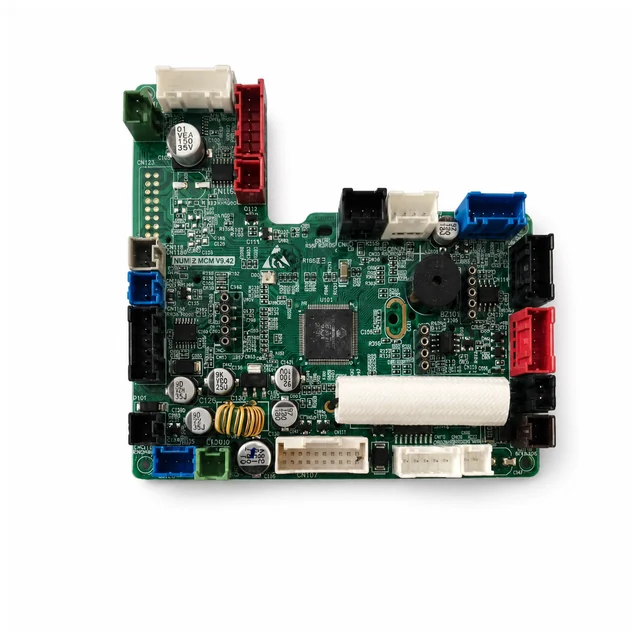
An FCC-photo reference showing a connector-rich low-voltage execution board and a separate Renesas-based application board with storage, board-to-board interfaces, and an ANT1 radio area.
Project context
How this product is typically engineered
An FCC-photo reference showing a connector-rich low-voltage execution board and a separate Renesas-based application board with storage, board-to-board interfaces, and an ANT1 radio area.
System architecture
Typical architecture
The control design should separate safety-critical valve, pump, motor, temperature, and occupancy functions from the UI, storage, and connectivity layer. The safety controller keeps final authority over water, motion, and heating requests.
Engineering risks to resolve
Decisions to close before release
- Maintain water-electric separation and safe shutdown across leakage, temperature, and sensor faults.
- Keep valve, pump, motor, and heater interlocks independent of application-processor or network failures.
- Control condensation, cleaner exposure, connector density, and EMC inside a complex wet appliance.
Validation plan
Checks to define before production
- Inject occupancy, water-level, flow, temperature, valve, pump, motor, and board-communication faults.
- Test high and low water pressure, blockage, leakage, condensation, cleaner corrosion, and abnormal power loss.
- Perform applicable leakage, grounding, dielectric, surge, EFT, ESD, RF-coexistence, and long-cycle system testing.
What to put in the RFQ
Files and records to agree before quoting
Use this list to agree the build inputs and release records for a similar product. The final set depends on the project.
Design baseline
Released schematic or block diagram, interface table, power states, critical constraints, and revision owner.
Manufacturing release
Gerber or ODB++, stack-up, centroid data, assembly drawings, approved DFM dispositions, and panel assumptions.
Material control
Released BOM revision, manufacturer part numbers, AVL or alternate rules, no-substitute lines, MSL handling, and exception approvals.
Validation record
Test method, acceptance criteria, sample or serial identity, measured result fields, and disposition. Example scope: Inject occupancy, water-level, flow, temperature, valve, pump, motor, and board-communication faults.
Production release
First-article status plus the agreed SPI, AOI, X-ray, ICT, FCT, programming, rework, OQA, labeling, and packing records.
During RFQ review, we confirm the required fields, sampling, limits, approvals, and record-retention period. Confidential project information stays within the agreed access rules.
Development and production controls
Typical manufacturing scope
- Safety-controller and application-board partitioning.
- Multi-actuator wet-appliance control.
- Storage, UI, and connectivity expansion.
Technical image review
Board-level evidence
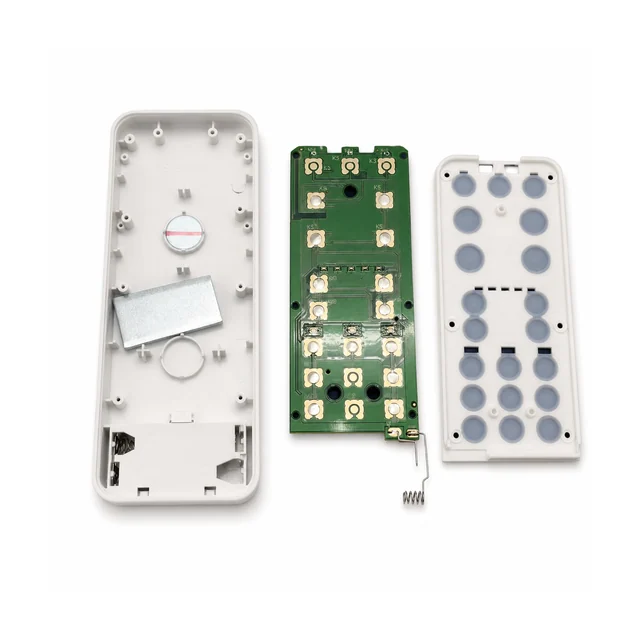
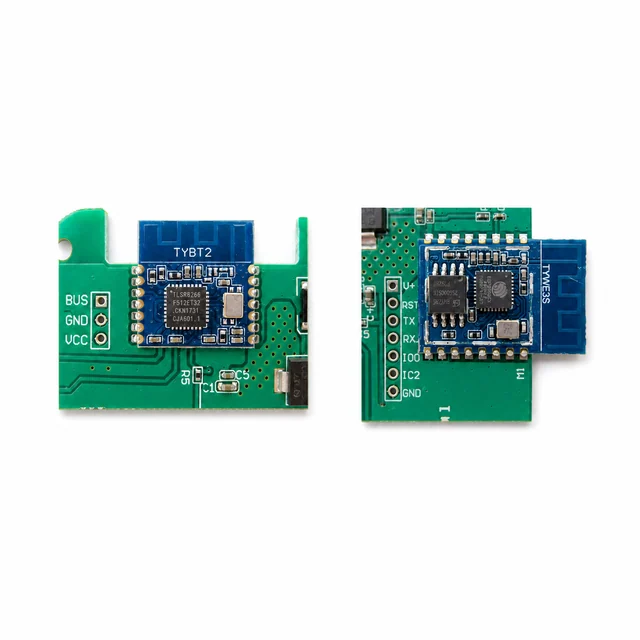
White-background views are published to make component placement, interfaces and assembly boundaries easier to inspect.