PCBA Partner assembles PLC, I/O, gateway, and automation boards in Dongguan. Programs can include DFM during RFQ, lifecycle BOM control, SMT and THT, and ICT, FCT, or burn-in when the RFQ defines coverage. Engineering-reviewed quotes are typically returned in 24 hours from a complete file set.
PLC and control boardsGateway and sensor modulesFunctional test planningLifecycle supply support
Service visualIndustrial control PCBA context
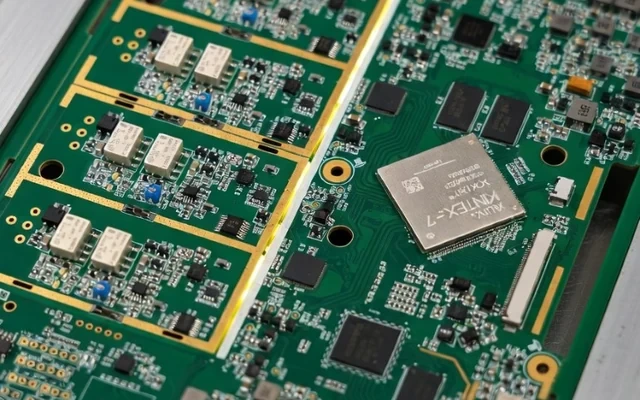
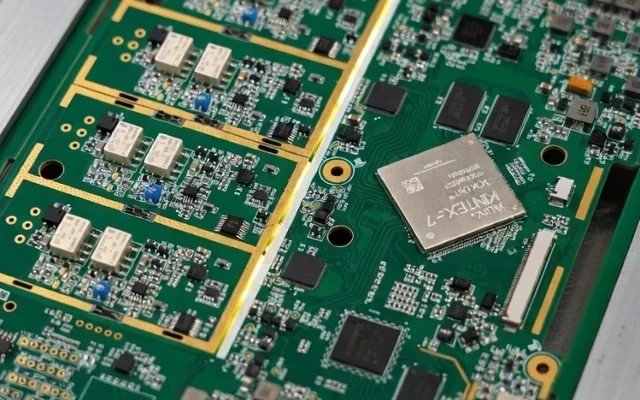
Representative industrial controller board context for mixed technology, connector density, and long-life sourcing.
Service life riskPlan sourcing, alternates, firmware, and repeat records for long-life products.
Functional reliabilityMatch assembly, programming, coating, and testing to field environment.
Variant supportManage connectors, options, labels, and firmware revisions across product families.
Next decisionShare operating environment, test criteria, and forecast.
Lifecycle BOM alternate approval
Long-life parts and approved alternates are reviewed against the released BOM. Substitutions that affect form, fit, function, or firmware need customer approval and a recorded revision before they enter a repeat lot.
Isolation and creepage DFM checks
DFM during RFQ can include connector loads, isolation, creepage, and keep-out notes from the drawings. Gaps are flagged before quoting so assembly and coating do not reverse a field-isolation requirement.
Functional-test fixture plan
Functional-test coverage is defined by the RFQ: ICT, FCT, or burn-in when specified, plus customer fixtures, firmware, and pass/fail limits. Visual inspection alone does not verify I/O or communications.
Industrial applications that fit this service
This page is for procurement and engineering teams sourcing PCBA for automation, energy, control, and machine electronics.
PLC and I/O boards
Connector-heavy boards with signal, power, and firmware requirements.
Industrial gateways
Communication modules, edge devices, and controllers with variant and labeling needs.
Sensor and measurement modules
Stable soldering, cleaning, calibration support, and repeatable test planning.
Motor and power control boards
Thermal, current path, terminal, and coating expectations reviewed before production.
Industrial control PCBA scope for long service cycles
Industrial buyers need boards that can be repeated, serviced, and tested consistently across years.
Capability range
PLC, gateway, HMI, sensor, I/O, and power boards
Connector-heavy SMT/THT and mixed assemblies
Firmware, label, and variant handling
Coating, cleaning, and packaging options when needed
Testing and controls
Functional test planning with customer criteria
Programming, calibration, or fixture support
Lifecycle and alternate-part review
Revision and service-spare record control
Buyer deliverables
Operating-environment risk comments
Assembly and test plan notes
Lot, firmware, and revision records
Repeat-build sourcing notes
Representative industrial and connected-control production experience
Authorized board-level images show relevant build patterns across multi-output control, power conversion, signal acquisition, power continuity, wireless gateways, and compact sensing. Public descriptions stay neutral where product identities or commercial details are confidential.
Evidence basisProduction records or customer authorization retained
Public boundaryNo unsupported customer, compliance, or field-performance claim
IND-01 · Multi-output control
Multi-axis equipment controller
A large mixed-function board coordinates multiple switched loads, communication interfaces, connectors, and firmware-controlled operating states.
Connector map and output-channel verification
Representative-load, current, and fault-state testing
IND-02 · Power conversion
Bidirectional power-conversion board
High-current paths, magnetics, thermal interfaces, heavy components, and cable exits require mechanical and electrical controls beyond normal SMT inspection.
Creepage, polarity, torque, and thermal-path review
Power-stage inspection and controlled-load testing
IND-03 · Signal acquisition
Mixed-signal acquisition module
Dense analog filtering, conversion, and programmable logic make cleanliness, component control, and repeatable calibration inputs important.
Analog-path cleanliness and noise review
Reference-input, calibration, and limit verification
IND-04 · Power continuity
DC hold-up and filtering controller
Conversion stages, energy storage, wired power interfaces, and status outputs must behave predictably across normal operation and source interruption.
Load-step, transition, and restart sequence checks
Polarity, temperature-rise, and output-ripple review
IND-05 · Wireless gateway
Multi-radio gateway interface
Compact radio modules, PCB antennas, host interfaces, firmware identities, and enclosure placement have to be controlled as one connectivity system.
Module, firmware, and identity traceability
Pairing, recovery, range, and coexistence checks
IND-06 · Compact sensing
Low-power environmental sensor node
A compact sensing board combines environmental inputs, low-power processing, wireless communication, and tight mechanical integration.
Sensor offset and controlled-reference checks
Standby current, radio recovery, and firmware validation
Evidence and confidentiality: publication is backed by retained production records or customer authorization. Program identities, commercial relationships, schematics, BOMs, firmware, test limits, and measured results remain confidential unless separately approved. The images demonstrate relevant engineering and manufacturing experience; they do not imply a public customer relationship, product endorsement, certification, or field-performance guarantee.
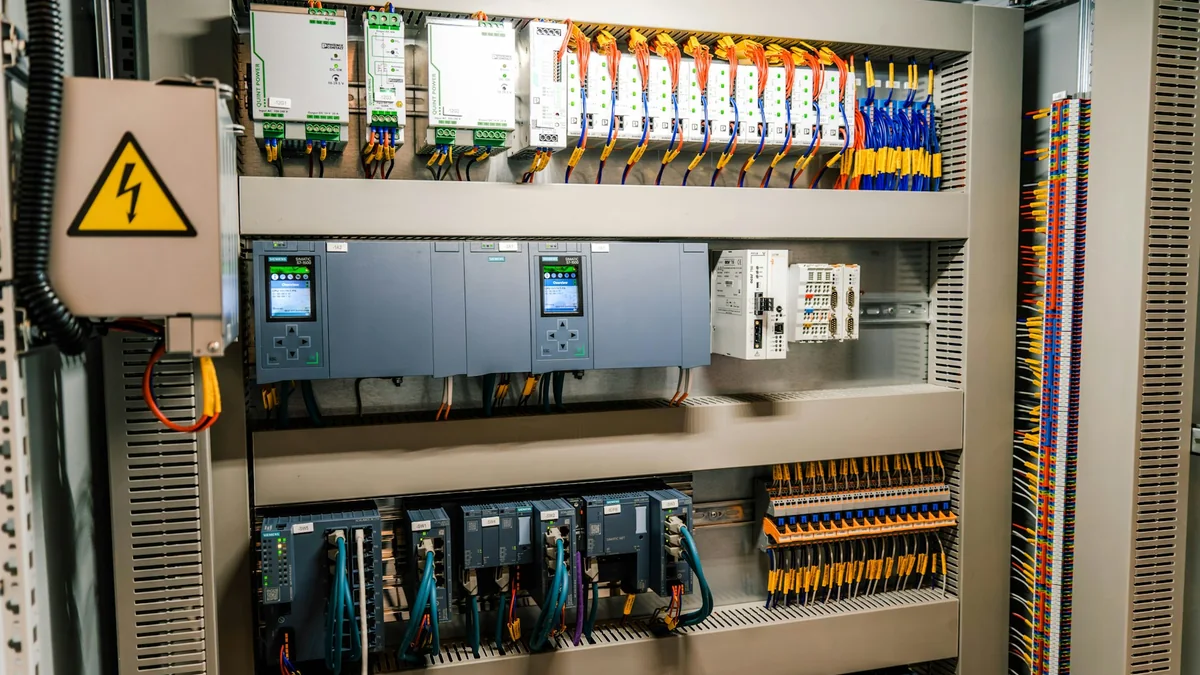
Control-board application contextLong-life industrial products need stable materials, firmware variants, and revision discipline.System integration environmentBoard interfaces, connectors, labels, and field wiring should be reviewed in the final control context.
Files and operating conditions for an industrial PCBA quote
Include the BOM revision, supply voltage, I/O functions, operating environment and expected repeat demand. Identify coating requirements and test acceptance criteria separately; assembly inspection does not establish environmental or product certification. See the inspection and release-record requirements.
For industrial programs, include expected service life and repeat order rhythm. It changes how sourcing, alternates, and test investment should be planned.
FAQ
What is industrial control PCBA? Industrial control PCBA is the assembly of PLC, I/O, gateway, and automation boards. A typical program includes DFM during RFQ, lifecycle BOM control, SMT/THT, and ICT, FCT, or burn-in when the RFQ defines coverage.
Do you assemble OEM industrial controller and control-board PCBA? Yes. OEM industrial controller, I/O, and control-board PCBA are in scope when files, firmware variants, and test coverage are defined. Engineering-reviewed quotes are typically returned in 24 hours from a complete file set.
Who supplies industrial automation PCBA in China? PCBA Partner assembles industrial automation and control boards in Dongguan. Send Gerber or ODB++, BOM, centroid, operating conditions, and the test scope to start an RFQ.
Can conformal coating be included? Yes, when coating areas, keep-out zones, inspection criteria, and environmental expectations are defined.
What should an industrial PCBA functional test cover? Define the functions to verify, such as power-up, digital and analog I/O, communications and firmware identification. Provide limits, loads, connections and pass/fail criteria. The agreed test procedure determines coverage; visual inspection alone does not verify operation.
How should component changes be handled on repeat industrial builds? Identify lifecycle-sensitive parts and approved alternates in the BOM. A proposed replacement should be reviewed for electrical, mechanical and firmware compatibility before approval. Record the approved part and revision so future lots use the same decision.
Can repeat orders use the same approved records? Yes. Repeat build continuity is one of the reasons to structure low-volume and industrial programs carefully.
Build an industrial PCBA plan
Send files, forecast, operating environment, and test expectations. We will identify sourcing, assembly, and release controls for your program.