Offices and meeting rooms
CO₂ demand changes as people enter and leave. Use a representative occupied-zone sensor to adjust the shared EC fan command, retain a configured minimum ventilation level, and let the building controller supervise operating hours. Set the demand curve from room use, outdoor-air requirements and measured airflow.
Classrooms and training spaces
Class periods create repeatable occupancy changes. A gradual output ramp reduces abrupt fan changes; an expiring manual override supports short-term ventilation adjustments. Commission the minimum and maximum settings against airflow and acoustic measurements for the room.
Hotels, apartments and residential ERVs
Supply and extract fans can share one ventilation demand while using separate voltage ranges and calibration coefficients. Coordinate with the unit’s own frost, bypass and heat-recovery controls. Temperature and humidity measurements are available for supervision; this controller’s automatic demand is based on CO₂.
Equipment manufacturers
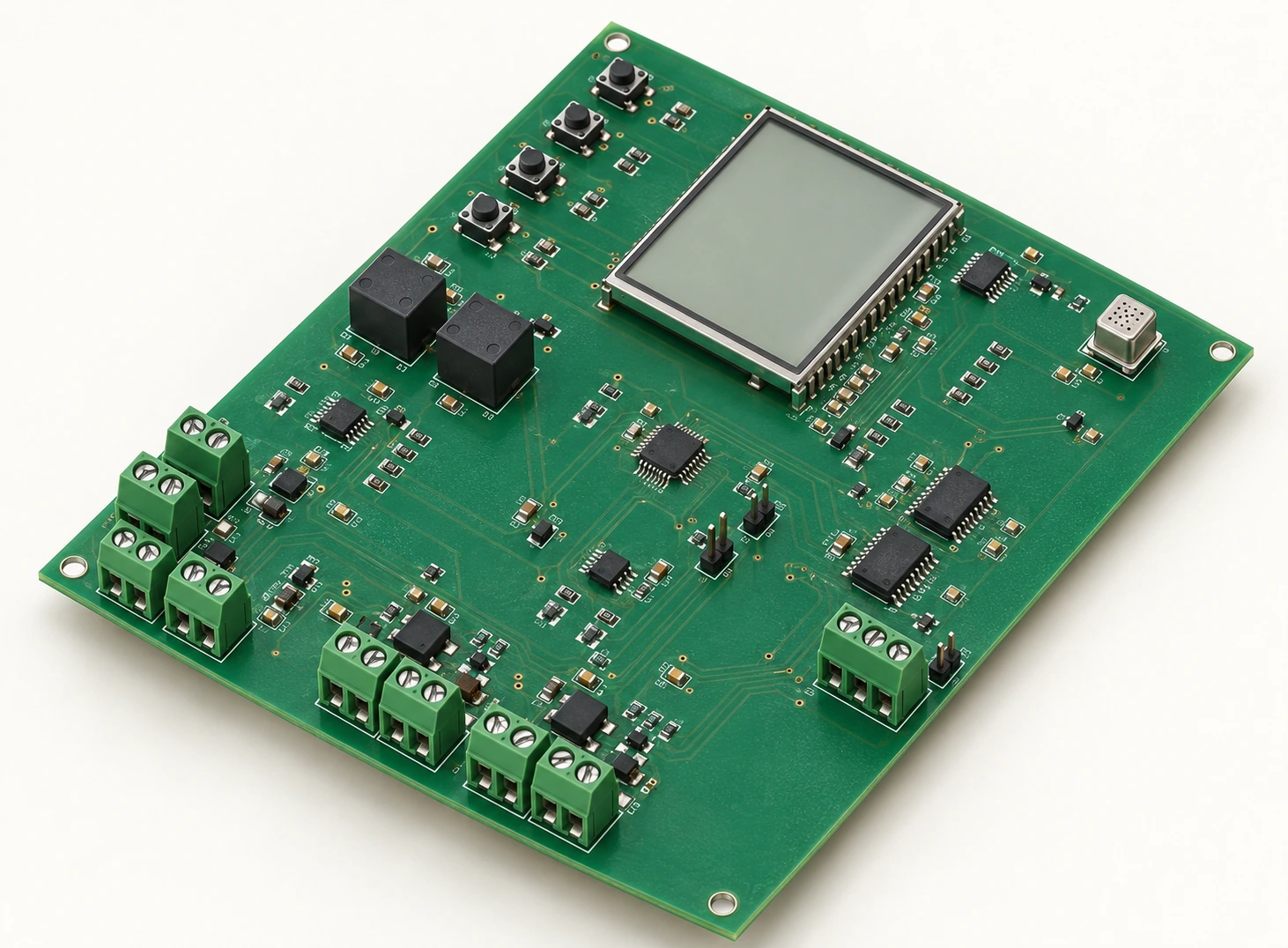
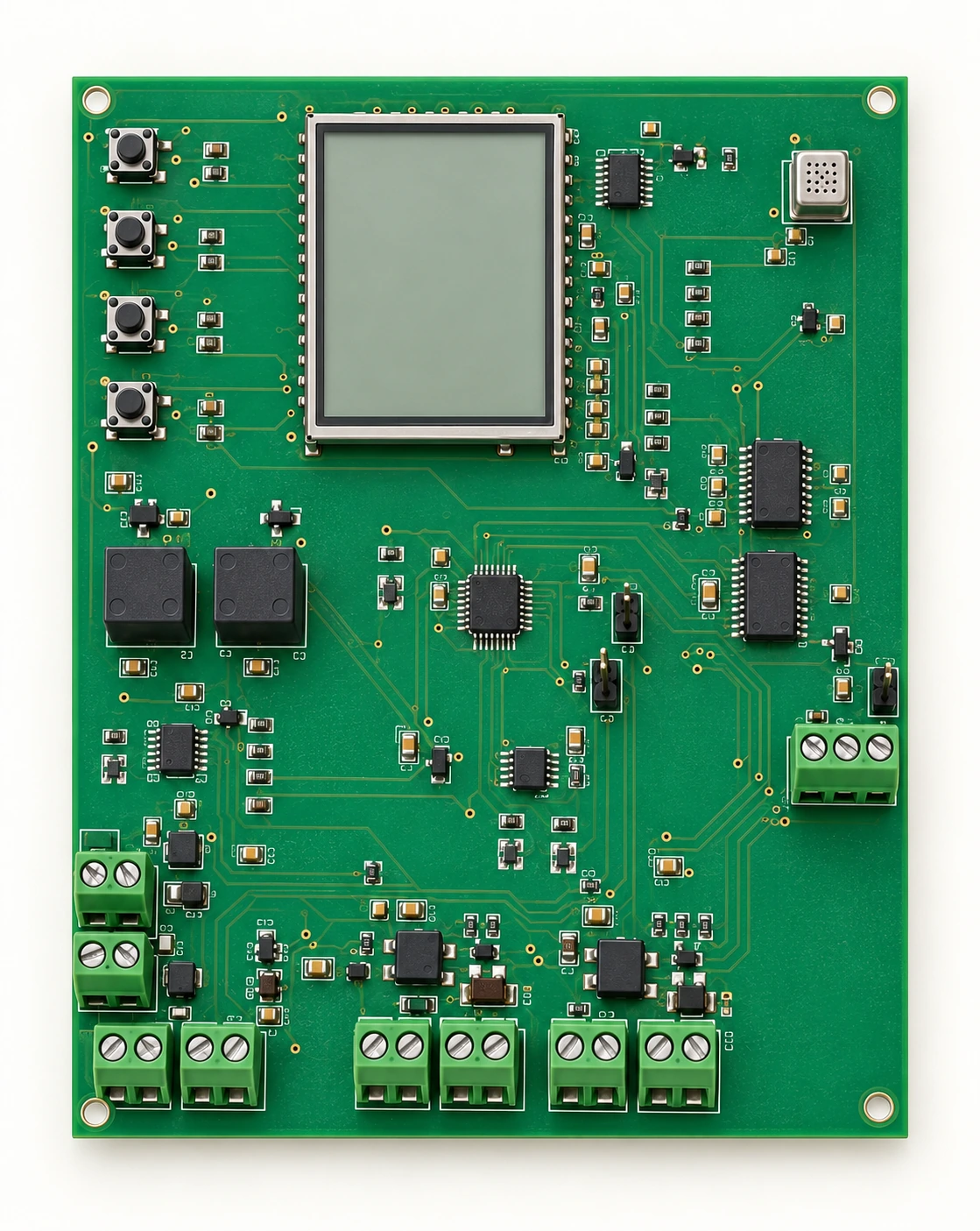
Use the controller architecture alongside EC fans, an ERV/HRV or a ventilation cabinet. Specify fan input impedance, analogue common, enable-contact electrical limits and healthy-contact behavior in the equipment interface sheet. Match terminal layout, display location and sensor exposure to the enclosure.
Building integration and refurbishment
A PLC or BMS acts as the Modbus RTU master and reads measurements, active state and faults. Retrofit is suitable where the fan already accepts compatible voltage and dry-contact controls. Units with PWM, proprietary bus or powered fault outputs require an explicit interface adaptation.
Multi-zone buildings
Assign a unique bus address to each controller and plan a representative measurement point for each ventilation zone. One local CO₂ measurement cannot describe every room in a large floor. Higher-level scheduling and cross-zone coordination belong in the BMS.