Define the product
Confirm users, mechanism, loads, sensors, connectivity, power, environment, and target markets.
- Product requirement brief
- I/O, load, and power table
- Risk and compliance targets
From product behavior to board design
Explore 10 reference designs for feeders, litter boxes, trackers, and connected pet products. Compare the electronics, firmware, and tests your project needs before committing to a design.
Start with your product brief or existing design files.

 A1 · Open hardware controller
Open hardware development project · A1
Explore the STM32G0 + ESP32-C3 architecture, DRV8876 motor drive, ADS1232 weighing front end and hardware-interlock design. Editable KiCad source, connector definitions and engineering audits are shared under CERN-OHL-P-2.0.
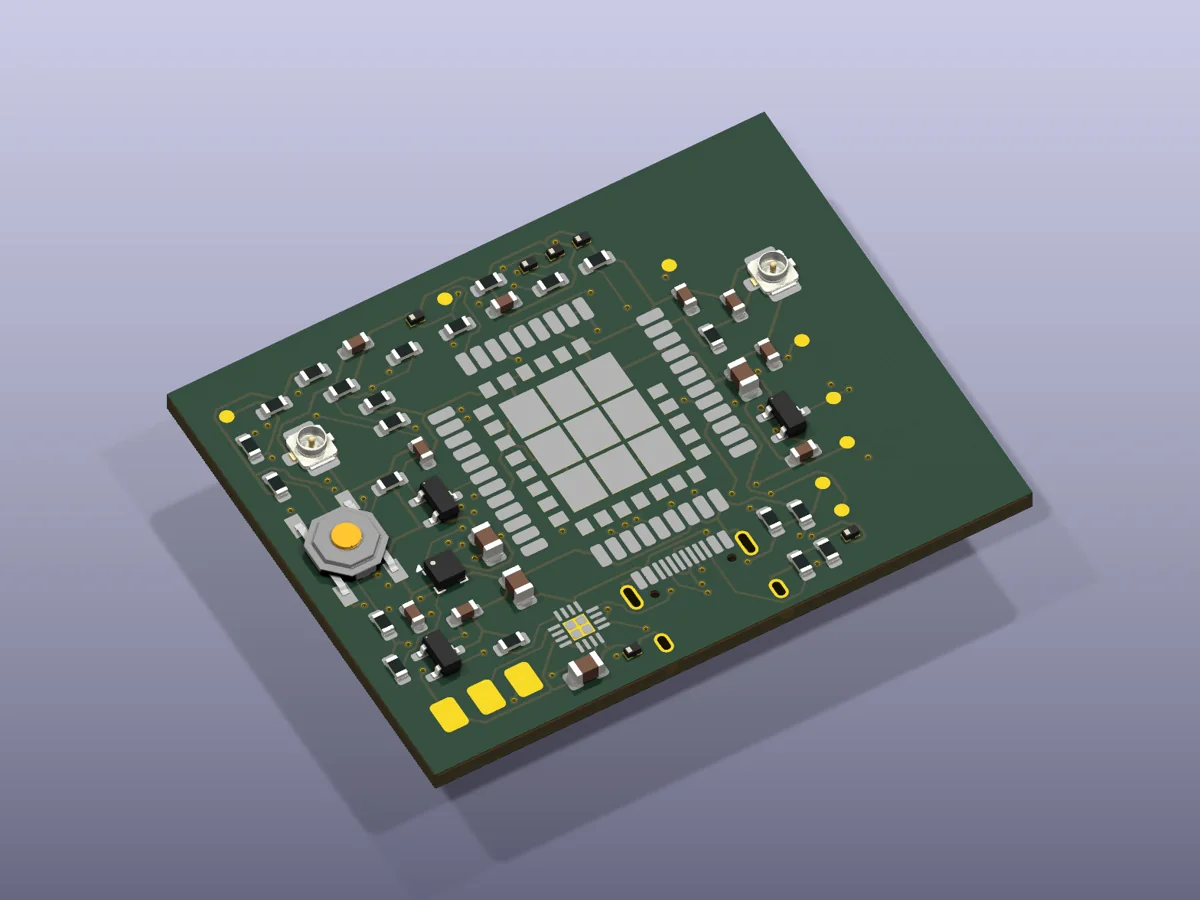
Pet tracker PCBA · PET-TRACKER-V05
Explore the SIM7080G cellular/GNSS architecture, STM32 control, motion sensing and single-cell battery design. View the double-sided layout, antenna connections and compact 45 × 35 mm board.
Find your application, compare the main design risk, and open the engineering notes for architecture and validation details.
Application architecture matrix
Compare the loads, sensors, connections, and failure conditions that shape each design.
Swipe horizontally to compare sensing, connectivity, and risk columns.
| Application family | Typical control load | Key sensing | Connectivity | Risk to close |
|---|---|---|---|---|
| Feeding & water | Geared motor, pump, heater | Level, temperature, blockage | Optional Wi-Fi / BLE | Dry-run, liquid separation, repeatable portions |
| Litter automation | Drum or rake motor | Presence, weight, position, current | Wi-Fi / BLE reporting | Pet detection, pinch or jam, fault recovery |
| Tracking & health | Battery-powered radio and sensors | GNSS, motion, battery, antenna state | Cellular / GNSS / BLE | Battery life, body-adjacent RF, ingress, privacy |
| Vision & care | Video SoC, IR, audio, pan-tilt | Image, audio, storage, temperature | Wi-Fi / Ethernet | Thermals, cybersecurity, storage endurance |
| Access & safety | Lock, door actuator, loop transmitter | Identity, position, obstruction, loop current | RFID / BLE / low frequency | Anti-pinch, power-fail state, outdoor exposure |
A useful reference shortens discovery, but the product still needs defined requirements, controlled interfaces, engineering evidence, and release files for its real enclosure and mechanism.
Confirm users, mechanism, loads, sensors, connectivity, power, environment, and target markets.
Lock power trees, interfaces, protection, control states, diagnostics, and service strategy.
Use engineering samples, fixtures, fault injection, lifecycle cycles, and environmental checks.
Complete DFM/DFT, approved BOM, programming, test limits, work instructions, and revision control.
Define the hardware, firmware, and production deliverables for your project. Scope and acceptance criteria are agreed during review.
Application understanding, architecture decomposition, risk identification, verification planning, and the engineering handoff needed for a custom PCBA program.
Reference images and visible brands are used for technical analysis. They do not imply endorsement, affiliation, an existing customer project, verified certification, or measured performance. Trademarks belong to their respective owners.
Let’s scope your next product
Tell us what the device should do, your project stage, and expected quantity. Include existing schematics, an enclosure drawing, or a reference ID if you have one.
Start with a short brief. Add files when available.
Prefer email? [email protected] ↗PCBA PARTNER is operated by Dongguan Hepin Electronic Technology Co., Ltd.