WELL-17 · Wellness Electronics
Wireless TENS and EMS Pulse Massager PCBA
A representative miniature stimulation-pod architecture for rechargeable wireless sessions, defined pulse generation, attachment detection, local controls, independent energy limits, and safe output discharge.
Project context
How this product is typically engineered
A representative miniature stimulation-pod architecture for rechargeable wireless sessions, defined pulse generation, attachment detection, local controls, independent energy limits, and safe output discharge.
System architecture
Typical architecture
A single-cell battery feeds logic and an intermittent stimulation boost stage; an MCU or wireless controller operates a limited bipolar output bridge, samples current or impedance, handles keys and alerts, and removes stored energy after shutdown.
Engineering risks to resolve
Decisions to close before release
- Limit pulse current and energy under open, short, wet-skin, and single-component fault conditions.
- Prevent DC bias or sudden intensity changes during contact transitions and wireless commands.
- Define a safe charging interlock and protect immutable output limits from app or OTA changes.
Validation plan
Checks to define before production
- Measure every mode and level across a matrix of equivalent loads for amplitude, pulse width, frequency, balance, monotonicity, and residual charge.
- Inject open, short, partial contact, hot-plug, boost, switch, battery, firmware, wireless-order, and charging faults.
- Run electrode-contact, USB, battery, RF, ESD, low-voltage, and maximum-load endurance without using people as production loads.
What to put in the RFQ
Files and records to agree before quoting
Use this list to agree the build inputs and release records for a similar product. The final set depends on the project.
Design baseline
Released schematic or block diagram, interface table, power states, critical constraints, and revision owner.
Manufacturing release
Gerber or ODB++, stack-up, centroid data, assembly drawings, approved DFM dispositions, and panel assumptions.
Material control
Released BOM revision, manufacturer part numbers, AVL or alternate rules, no-substitute lines, MSL handling, and exception approvals.
Validation record
Test method, acceptance criteria, sample or serial identity, measured result fields, and disposition. Example scope: Measure every mode and level across a matrix of equivalent loads for amplitude, pulse width, frequency, balance, monotonicity, and residual charge.
Production release
First-article status plus the agreed SPI, AOI, X-ray, ICT, FCT, programming, rework, OQA, labeling, and packing records.
During RFQ review, we confirm the required fields, sampling, limits, approvals, and record-retention period. Confidential project information stays within the agreed access rules.
Development and production controls
Typical manufacturing scope
- Bipolar pulse generation and hardware energy limiting.
- Electrode-contact and load supervision.
- Wireless sessions, local keys, and charge management.
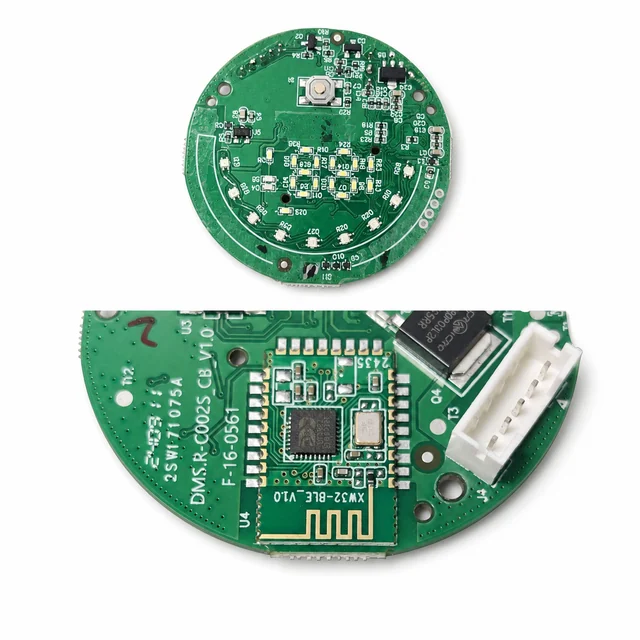
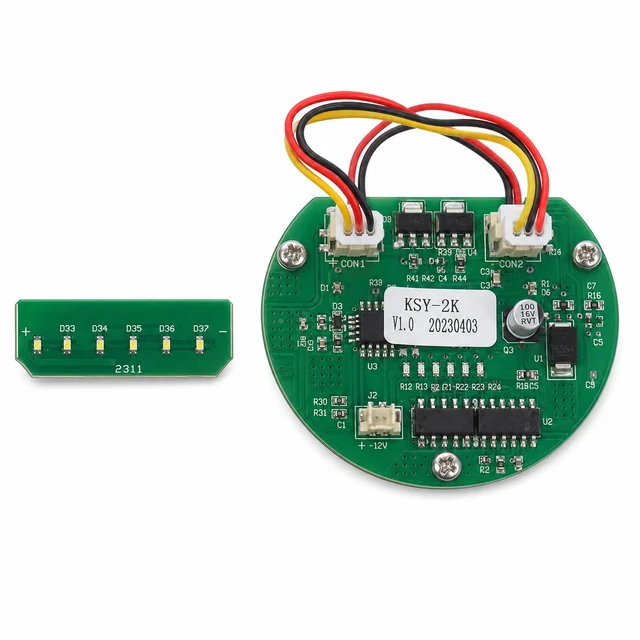
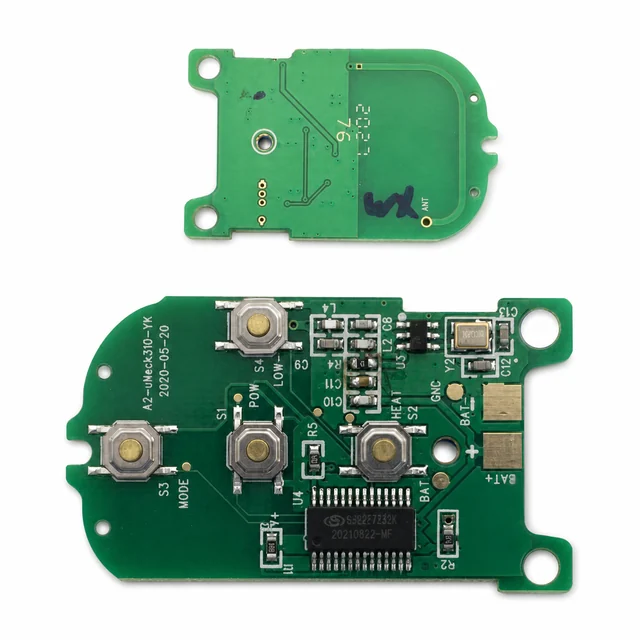
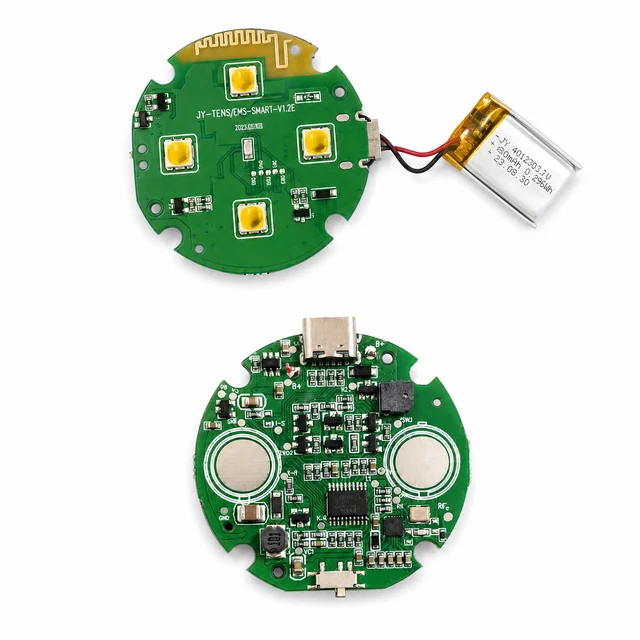
Technical image review
Board-level evidence
White-background views are published to make component placement, interfaces and assembly boundaries easier to inspect.