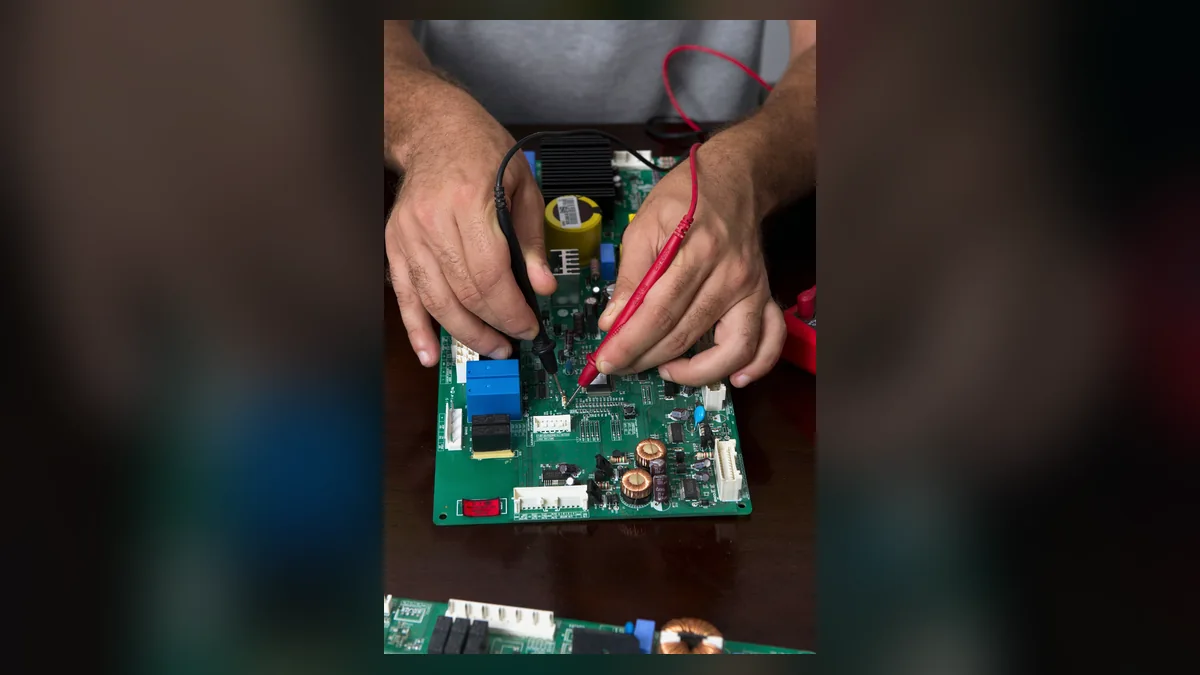
Test strategy should be designed before pilot run, not after defects appear. The right choice depends on product maturity, quantity, fault coverage needs, and how much traceability the customer expects from each shipped unit. After the method is chosen, write the limits and records in the industrial-control worked test plan.
Select coverage before selecting equipment
| Method | Use it when | It does not prove |
|---|---|---|
| Flying probe | EVT / changing revisions; fixture NRE not justified; some nets are accessible | Powered product behavior, firmware identity, or inaccessible nets |
| ICT | Layout already has test points; design is frozen; repeat volume pays for the fixture | Firmware, communications, calibration, or unprobed nets |
| FCT | The product must prove power-up, I/O, comms, sensors, or programming under stated limits | Every solder joint or every field environment unless those checks are in the procedure |
| Combined | Workmanship, electrical faults, and product behavior need different stations | Anything omitted from the written coverage matrix |
Volume, access, and design freeze
Three questions usually decide the mix:
- Is the revision still moving? If yes, flying probe plus a lightweight FCT beats a fixture designed to last week’s connector map.
- Are the nets accessible? ICT needs test points designed in. Flying probe needs probe access. Neither creates access after the PCB is frozen.
- Will the same procedure run on repeat lots? A dedicated FCT fixture pays back when the I/O map, firmware check, and numeric limits are reused. It does not pay back on a one-off EVT.
A useful combined pattern for industrial control is flying probe (or ICT) for structural faults, then FCT for powered behavior. SPI, AOI, and X-ray stay in the assembly plan; they are not substitutes for FCT. See the method comparison table for what each inspection step cannot prove.
Illustrative mix for a 24 V I/O controller — not a customer claim
Use the same industrial-control pattern as the worked plan: 50 EVT pieces while the I/O map can still change, then about 200 pieces per quarter. Flying probe covers opens and shorts on EVT without waiting for a fixture. An FCT fixture is authorized only after firmware identity, connector map, and numeric limits freeze. ICT is added only if test points already exist and yearly volume recovers the bed-of-nails NRE. Isolation, coating, and environmental tests remain out of this electrical mix unless the RFQ names them.
That mix is a decision, not a quote. The worked test plan turns it into stations, example limits, and serial fields.
What to send so the quote matches the plan
Share schematic or netlist access notes, test-point constraints, firmware load method, fixture ownership, expected log fields, and whether EVT, DVT, and repeat lots use the same coverage. Those details let the quotation separate NRE from unit test time instead of hiding both inside “test included.”
Map this choice through the PCBA buyer decision center and the primary quality process. For a filled industrial I/O example with stations, limits, and serial fields, use the worked test plan.
For repeated lots, use the ICT fixture capacity and maintenance guide to connect the proposed throughput with fixture availability, maintenance, calibration where required and retained test configuration.