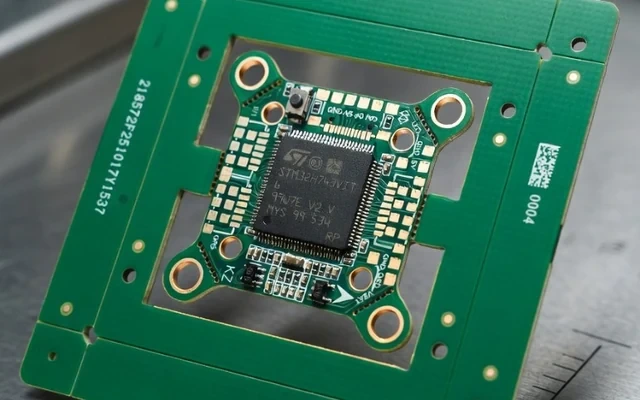
Short answer: an ECU PCBA is ready for PPAP when the process is capable before the documents are packaged. Control plans should reflect real failure modes, unit or lot traceability should meet customer and control-plan requirements, and changes should go through the required approval process. Documentation without a stable process window will not hold up in review.
Automotive electronics demand more than high yield. Customers expect disciplined documentation, reproducible process windows, and clear genealogy from incoming material to shipped serial number. For ECU and domain controller projects, a strong automotive PCBA process is critical before PPAP milestones.
Process capability before documentation packaging
PPAP evidence is only meaningful if the line is stable. Start with validated print and reflow windows, calibrated placement libraries, and defect-code consistency across AOI, X-Ray, and rework stations. Stable process first, paperwork second.
Control plans should reflect real failure modes
Build control plans around known risks: BGA opens, insufficient heel fillet on connectors, and void ratio on thermal pads. Link each risk to prevention and detection actions, sampling frequency, and reaction plans.
Genealogy and label architecture
- Material lot to board serial mapping at feeder or batch level
- Process timestamps for paste lot, oven profile, AOI station, and test station
- Revision linkage for firmware and calibration values on shipped units
Change management in automotive is non-negotiable
Even small substitutions can trigger revalidation depending on criticality. Define who owns deviation approval, when a new FAI is required, and how customer notification timelines are enforced.
Program launch recommendation
If you are evaluating an automotive PCB assembly manufacturer in China, ask for recent examples of control plans, MSA records, and lot traceability reports. You can also review related vertical capabilities in our automotive electronics section before qualification calls.