WELL-12 · Wellness Electronics
Hand Air-Compression Massager Control System
A representative hand-care architecture combining sequenced pneumatic compression, optional vibration and warming, an accessible LCD interface, and default pressure release.
Project context
How this product is typically engineered
A representative hand-care architecture combining sequenced pneumatic compression, optional vibration and warming, an accessible LCD interface, and default pressure release.
System architecture
Typical architecture
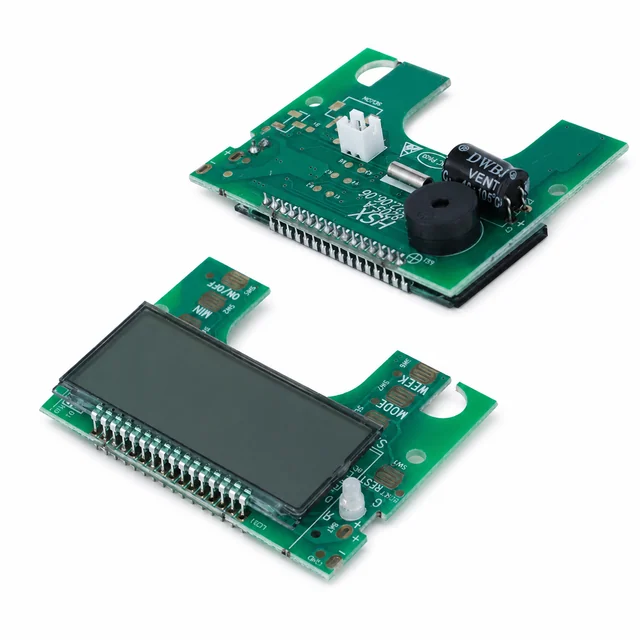
The pictured UI board handles the segmented display, key areas, buzzer, and main-board link; a separate power controller is expected to operate the pump, inlet or exhaust valves, heater, vibration motor, pressure sensing, and NTC feedback.
Engineering risks to resolve
Decisions to close before release
- Provide immediate release when the user's hand is enclosed.
- Prevent pump and motor noise from corrupting touch or sensor inputs.
- Hold consistent pressure and surface temperature across seal and fit variation.
Validation plan
Checks to define before production
- Verify all LCD segments, keys, buzzer states, communication, and noise immunity on the UI board.
- Use a standard handform to measure pressure rise, peak, leakage, release time, vibration, and temperature uniformity.
- Inject pressure, valve, NTC, low-battery, and power-loss faults and run pneumatic and thermal endurance.
What to put in the RFQ
Files and records to agree before quoting
Use this list to agree the build inputs and release records for a similar product. The final set depends on the project.
Design baseline
Released schematic or block diagram, interface table, power states, critical constraints, and revision owner.
Manufacturing release
Gerber or ODB++, stack-up, centroid data, assembly drawings, approved DFM dispositions, and panel assumptions.
Material control
Released BOM revision, manufacturer part numbers, AVL or alternate rules, no-substitute lines, MSL handling, and exception approvals.
Validation record
Test method, acceptance criteria, sample or serial identity, measured result fields, and disposition. Example scope: Verify all LCD segments, keys, buzzer states, communication, and noise immunity on the UI board.
Production release
First-article status plus the agreed SPI, AOI, X-ray, ICT, FCT, programming, rework, OQA, labeling, and packing records.
During RFQ review, we confirm the required fields, sampling, limits, approvals, and record-retention period. Confidential project information stays within the agreed access rules.
Development and production controls
Typical manufacturing scope
- Segmented-display and key integration.
- Pump, valve, vibration, and heater system planning.
- Default release and timed-session control.
Technical image review
Board-level evidence
White-background views are published to make component placement, interfaces and assembly boundaries easier to inspect.