
Short answer: ask your EMS partner to link each serial number or lot to its component lots, process records (stencil, program, reflow profile), test results, rework history and shipment. Agree the depth and format before the RFQ is locked, because records that were not captured during the build cannot be rebuilt later.
Traceability is often discussed only when something goes wrong. In reality, it should be designed before production starts. Good PCBA traceability helps teams isolate risk, investigate failures, support audits, manage recalls, and make better engineering decisions. The right data level depends on product risk, industry requirements, and customer expectations.

Traceability starts on the SMT line. Our SMT setup verification checklist shows how feeder, reel and lot checks are logged before the first board is built.
Report the actual genealogy boundary when material is mixed
Define whether each relationship is recorded by serial, panel, work order or a broader batch. A search result should show that granularity and the uncertainty relevant to containment. Do not present a batch association as exact per-unit material genealogy merely because the system can display a serial number.
On small screens, scroll the table sideways to compare columns.
| Available records | Supported query | Question still open |
|---|---|---|
| Exact component-to-unit association | Identify recorded units using that material | Are all required operations and replacements included? |
| Material issued only to a work order | Identify the documented work-order population | Which individual units actually received each material lot? |
| Rework replacement recorded | Link old/new material and unit history | Was the change effective before the relevant result/release? |
| Missing or contradictory relationship | Identify the gap and an authorized containment boundary | What further records are needed for rework or scrap decision? |
Hypothetical limitation: a ten-unit work order uses two component lots, but the retained record only links both lots to the work order. It cannot prove that five particular units used each lot. State the documented ten-unit boundary and use the authorized investigation/containment process rather than inventing a precise split.
Demonstrate both serial-to-history and lot-to-affected-population retrieval, including repairs and corrected identities. Preserve original events when later records are added. Reconcile the export against the delivered serial list and agreed record requirements using the digital-record acceptance exercise.
Follow the complete PCBA buyer decision center, review the primary quality-record path, or browse cases with traceability-related controls.
Reference context: the IPC-1782 traceability standard frames manufacturing and supply-chain traceability around perceived risk agreed by the user and supplier. It describes four traceability levels for materials and processes. Use the contract, customer requirements, and applicable regulations to decide what records are actually needed; do not assume that a generic checklist is sufficient for every product. See the engineering editorial and record standards for how this guide uses sources and team attribution.
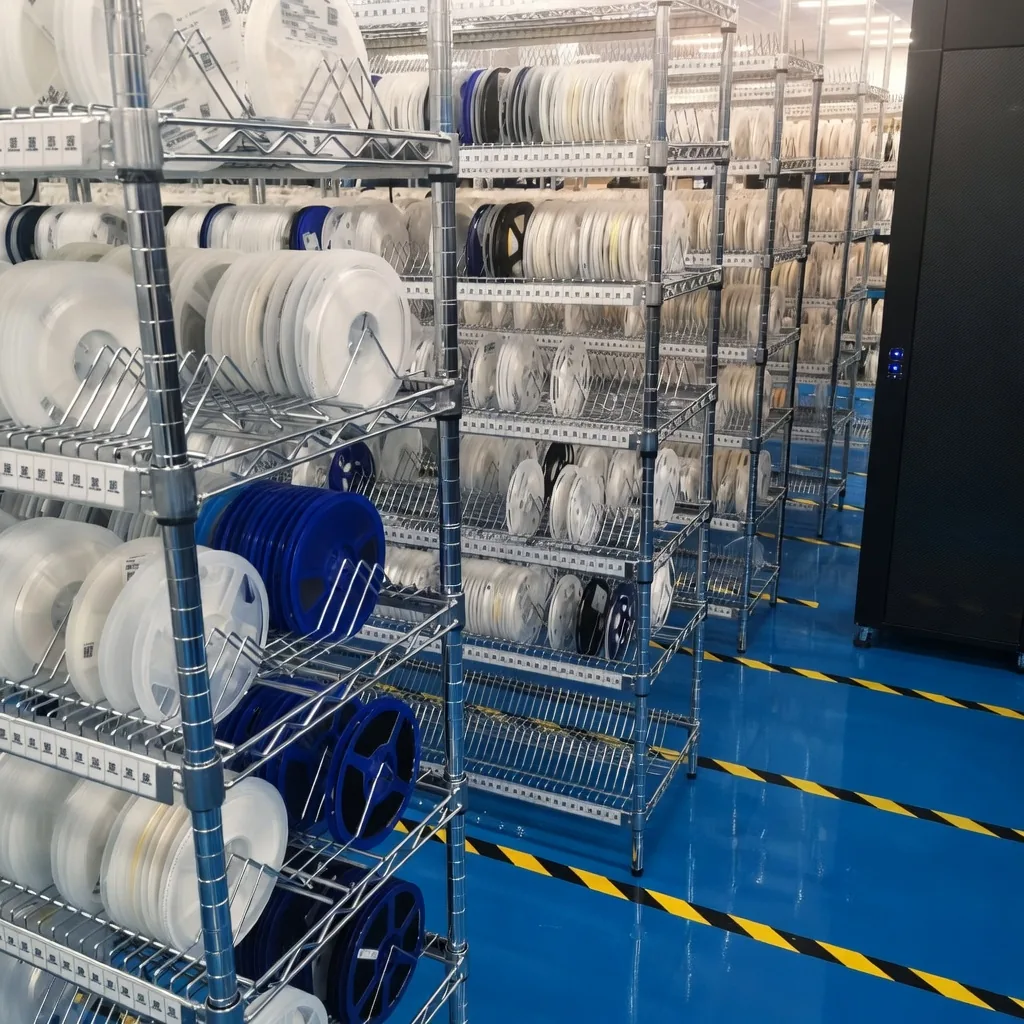
1) Start with lot-level material genealogy
At a minimum, OEMs should know which material lots were used in which production lots. For higher-risk products, traceability may need to connect specific serial numbers to component reels, date codes, incoming inspection records, and supplier documents.
2) Keep process records tied to the build
Useful records include work order, production date, line, operator or station where appropriate, stencil revision, reflow profile reference, AOI program version, X-ray result rework or scrap decision, and any deviation approvals. These records help separate random defects from systemic process issues.
3) Capture test data in a format that can be searched
Functional test logs should be more than screenshots. A useful log includes serial number, firmware version, test station, time stamp, measured values, pass/fail result, and failure code when applicable. Searchable data makes trend analysis and field investigation much faster.
4) Use an SMT traceability log that buyers can audit
An SMT traceability log should connect each production lot—or each serialized board when the risk requires it—to the materials, line records, inspection records, and test results used for release. The goal is not to collect every possible field. It is to create a searchable chain that can isolate affected units quickly when a component, process, or test issue appears.
- Work order, PCB revision, BOM revision, and approved deviation reference
- Component manufacturer part number, supplier, reel or lot ID, and date code where required
- SMT line, build date, feeder or loading verification, stencil revision, and reflow profile reference
- SPI, AOI, X-ray, ICT, FCT, and programming result linked to the lot or serial number
- Rework rework or scrap decision, retest result, final release status, and shipment lot
SMT traceability log example
One line per serialized board (or per lot when unit-level tracing is not required). The example below is illustrative only; the full 41-field version is in the PCBA traceability field template (XLSX) and CSV.
| Field | Example value | Why buyers ask for it |
|---|---|---|
| Work order / PCBA serial | EXAMPLE-WO-001 / EXAMPLE-PCBA-0001 | Key used to find every other record for one board |
| PCB revision / BOM revision | A / BOM-A | Proves the build matched the released design |
| SMT line / build date | SMT-1 / 2026-08-14 | Limits a containment to one line and date range |
| Reference designator / MPN | U1 / EXAMPLE-MPN-001 | Links the placed part to the approved BOM line |
| Reel or lot ID / date code | EXAMPLE-REEL-001 / 2610 | Finds every board that used a suspect reel |
| Feeder loading verification | EXAMPLE-LOAD-001 | Shows the reel was verified at the correct feeder |
| Stencil revision / reflow profile | STENCIL-A / PROFILE-A | Ties solder defects to a process setup |
| SPI / AOI / X-ray result | EXAMPLE-SPI-001 / Pass / Not applicable | Inspection records for the same serial |
| ICT / FCT / firmware | Pass / Pass / FW-1.0.0 | Confirms test coverage and the loaded image |
| Rework or nonconformance ID | None | Separates first-pass boards from repaired boards |
| Release status / shipment lot | Pass / EXAMPLE-SHIP-001 | Connects factory records to what the customer received |
Agree the export format before production—such as CSV, spreadsheet, API output, or a tracked PDF report—and confirm how long records will be retained. Buyers can align the fields with our PCBA quality records and map responsibility through the manufacturing workflow before the RFQ is locked.
5) Record rework and repair honestly
Rework is not automatically bad, but undocumented rework is dangerous. Define what can be repaired, who can approve it, how it is inspected again, and whether it must be reported. For some products, rework limits should be part of the quality agreement.
6) Connect production data with shipment data
- Serial-number range or lot number shipped
- Carton and label information
- Final OQC result and packing confirmation
- Customer PO, shipment date, and destination
Practical takeaway
Do not ask for every possible record if you will never use it. Ask for the data that supports your product risk model. PCBA PARTNER can help define a traceability package that fits prototypes, pilot production, or repeat manufacturing without creating unnecessary admin burden.
Review a proposed record export against the digital build-record planning guide. Confirm that identifiers can connect material decisions, assembly configuration and test results for the lot or unit you need to investigate.