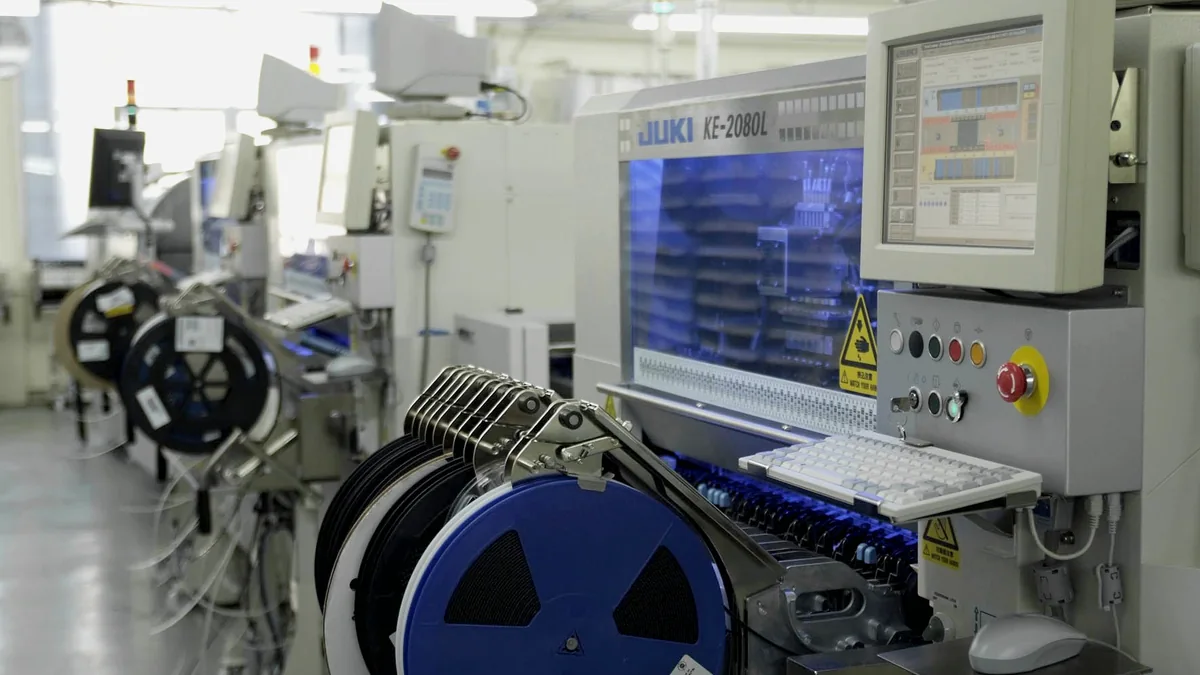
Short answer: an SMT line audit should test process discipline, not just list machines. Check whether placement capability fits your parts, how stencils and solder paste are controlled, how programs and first articles are approved, whether SPI and AOI results drive corrective action, and how moisture-sensitive and ESD-sensitive materials are handled.
An SMT line audit should not be a tour of machines only. Equipment matters, but repeatable PCBA quality comes from the way people, materials, programs, inspection, and corrective actions work together. A useful audit looks for process discipline.
Placement capability and product fit
Confirm whether the line can support the smallest passives, fine-pitch ICs, BGA packages, odd-form parts, double-sided SMT, and panel size required by your design. Capacity alone is not enough. The line must match the product mix, component height, board thickness, and inspection needs.
Stencil and paste control
Many SMT defects start at paste printing. Ask how stencil thickness is selected, how paste is stored and thawed, how stencil cleaning is scheduled, and how SPI data is used. If SPI is only treated as a pass/fail gate, the factory may miss valuable trend signals.
Program control and first article approval
- Version-controlled placement programs
- Verified feeder setup and barcode checks
- First article inspection before batch release
- Clear rules for program changes after approval
Inspection and feedback loop
AOI and X-ray are most useful when defect data is reviewed and fed back to process engineering. Ask how the factory tracks repeated defects, whether false calls are separated from real defects, and how corrective actions are closed before the next lot.
Material handling discipline
MSL components, partial reels, date-code sensitive parts, and customer-consigned materials require clear storage and traceability. Good factories can show how materials move from receiving to SMT loading and how unused material is returned or stored after production.
Audit this handoff with the PCBA MSL material exposure guide and log, which keeps label evidence, opening events, controlled storage, approved bake decisions, line issue/return, and lot release connected.
Practical takeaway
A strong SMT audit checks whether the factory can control variation. Our PCBA supplier team in China supports customers with transparent engineering review, first article checks, inline inspection, and production feedback so NPI issues are corrected before volume ramp.
Relate equipment and process discussions to the proposed build. The PCBA sourcing signals guide provides questions for checking whether a broad industry claim changes the evidence you need from a supplier.