Retail display & chest freezers
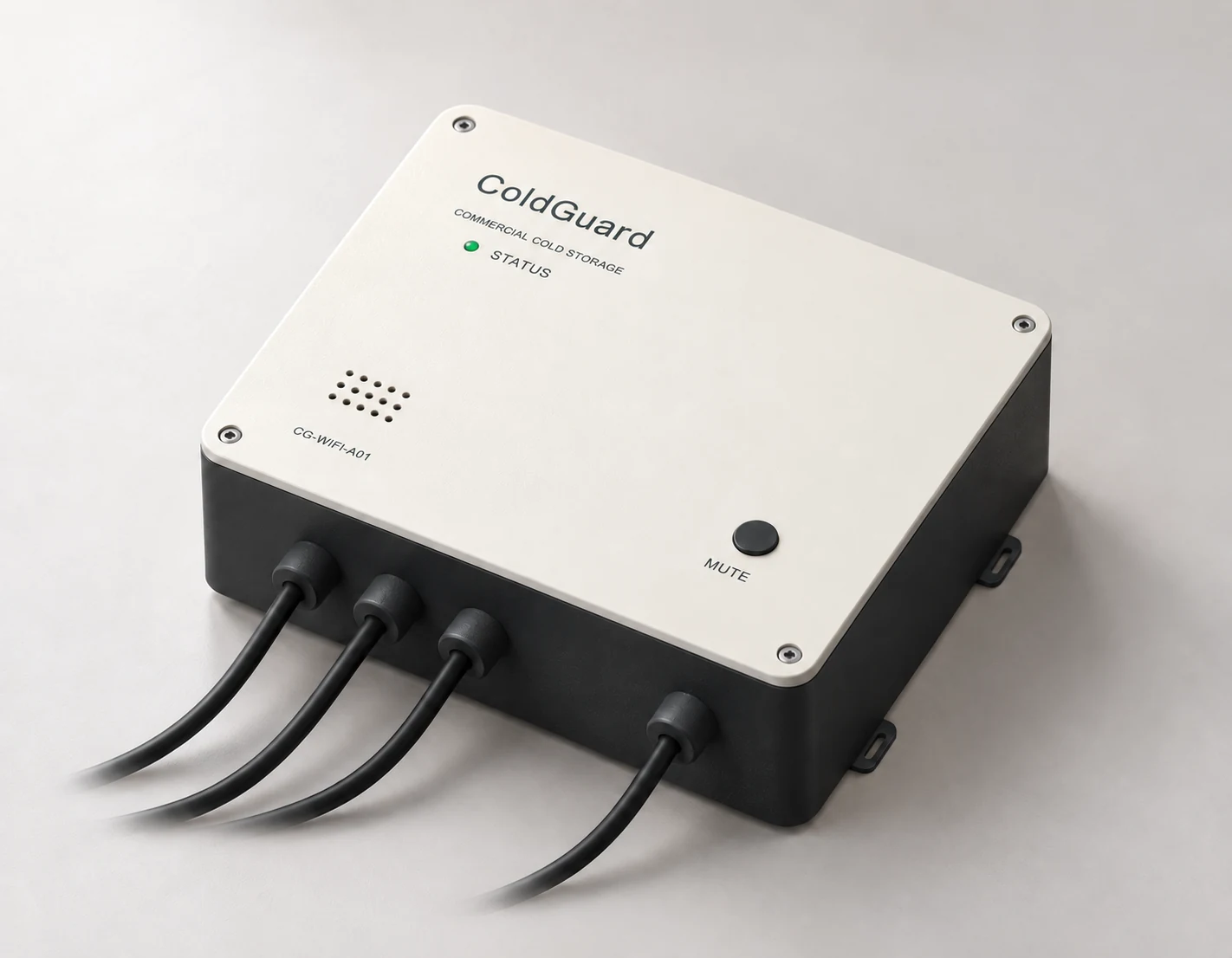
Place an air probe in the storage zone and a second probe in a thermally buffered reference. Track cabinet temperature, prolonged door opening and supply loss during sales and restocking. Keep the display probe away from the evaporator outlet and heated door frame.
Restaurant & catering equipment
Retrofitting prep refrigerators, upright freezers and ingredient storage cabinets gives kitchen staff local audible alerts and operators a history by device. Chilled ingredients and frozen stock require different high/low limits, recovery hysteresis and opening delays.
Small cold rooms
Use T1/T2 for two representative positions, such as a warm return-air zone and a shelf away from the cooling unit. A two-probe device provides local observations; larger rooms need additional devices and a temperature-mapping plan for spatial coverage.
Equipment service & chain stores
Assign a device identity to each asset, compare alarm history and separate store connectivity from cabinet failures. A service team can use repeated probe, door, clock or storage faults to plan maintenance and document corrective action.
Defrost and loading workflows
Air temperature reacts rapidly when a door opens or defrost starts. A buffered reference responds more slowly. Compare both histories with planned operating windows, and choose delay settings long enough for the normal cycle while preserving alarms for persistent excursions.
Power interruptions
Sense the low-voltage output of the monitored adapter before the battery-backed power path. The battery supports the monitor after supply loss. Immediate remote delivery also requires the Wi-Fi router and upstream connection to remain powered; otherwise events are recorded locally for later upload.